N. Orsini · Projects
Narrative Learning Module

Roll for Inspiration

Role Instructional Designer / Curriculum Author
Format 45-page classroom module
Audience Multi-level learners (B1-B2)
Publisher Crow's Call Press
§ 01

Overview

Roll for Inspiration is a narrative role-playing learning module that adapts tabletop game mechanics for collaborative language development. Students design characters, build shared worlds, and navigate structured encounters that require improvisation, strategic thinking, and applied literacy. Through guided storytelling and reflection, learners develop confidence in narrative expression and collaborative problem-solving.

Inspired by tabletop role-playing games such as Dungeons & Dragons, this educational resource allows students to practice English literacy, comprehension, and applied storytelling through collaborative play. By combining elements of game design with the mechanics of immersive world-building, students are guided to use their language skills to construct a shared narrative campaign.

Over the course of several lessons, students transition from individual character development and legacy creation to collaborative low- and high-fantasy world-building through NPC creation, encounter design, and the development of fully realized settings. The instructor acts as a Dungeon Master, facilitating the world the students have imagined while guiding them through opportunities to practice strategic thinking, analytical reasoning, and applied language skills.
§ 02

Instructional Challenge

Traditional language instruction often emphasizes incremental skill development that can feel repetitive or disconnected from real communication. As a result, many learners struggle with spontaneous speaking, adaptive thinking, and varied expression even after years of formal study.

This project was designed to create a learning environment where students apply creativity and language skills simultaneously through structured narrative play. Rather than relying on lecture-driven instruction, the module positions students as collaborative storytellers responsible for shaping the narrative world together. Through this approach, learners challenge and support one another while developing confidence in both individual expression and collective problem-solving.

§ 03

Design Approach

Example Module Pages

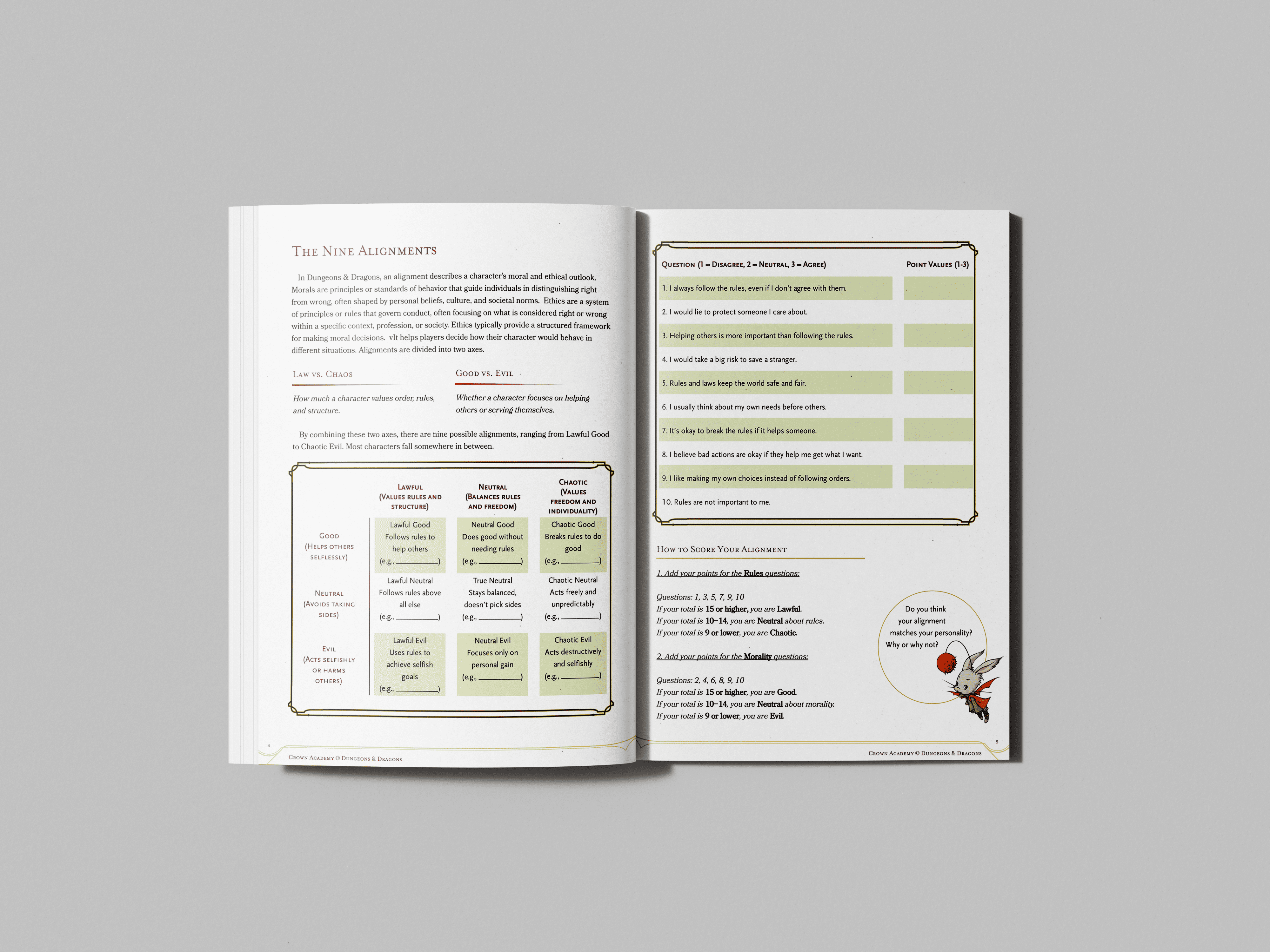
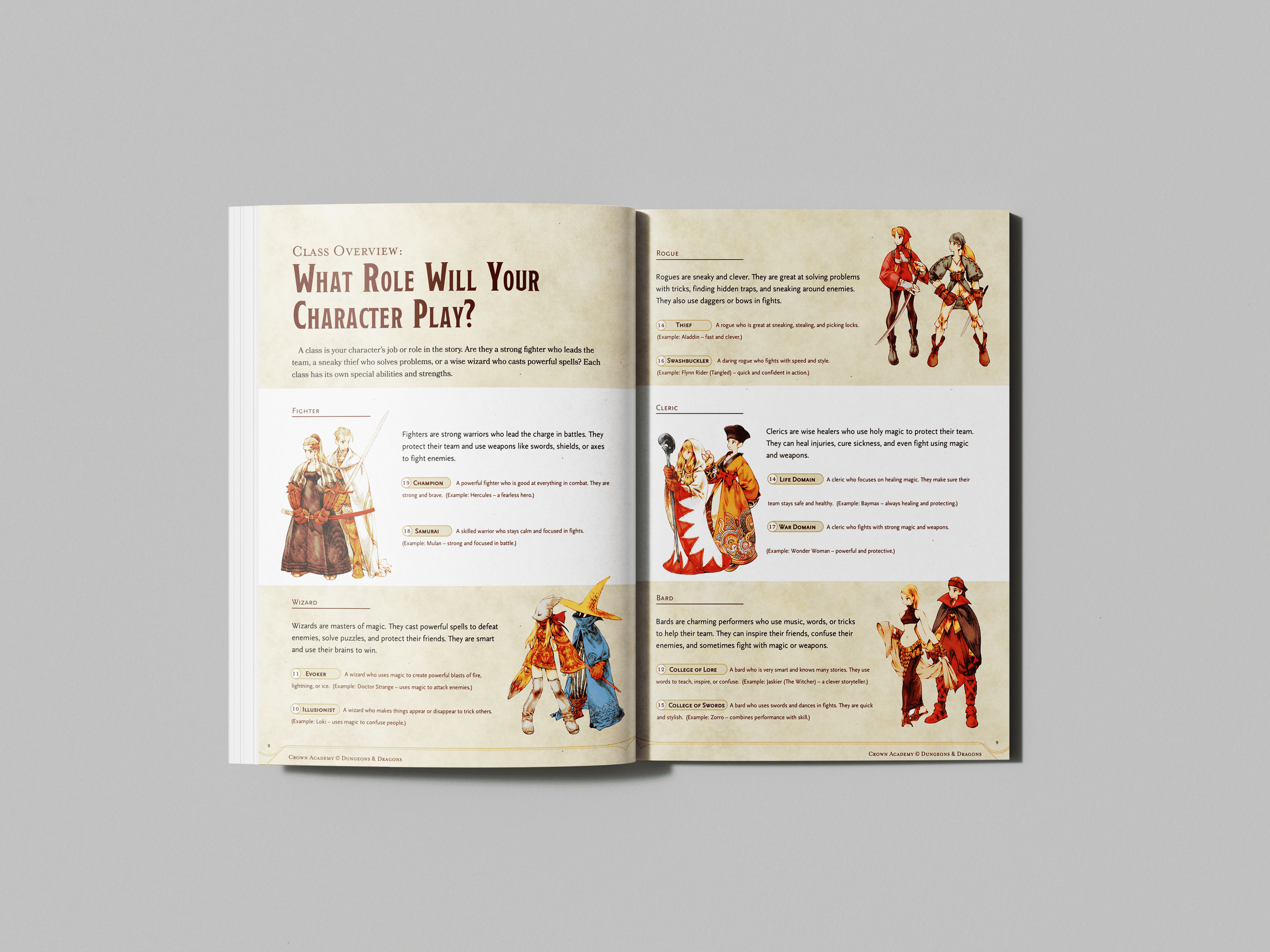
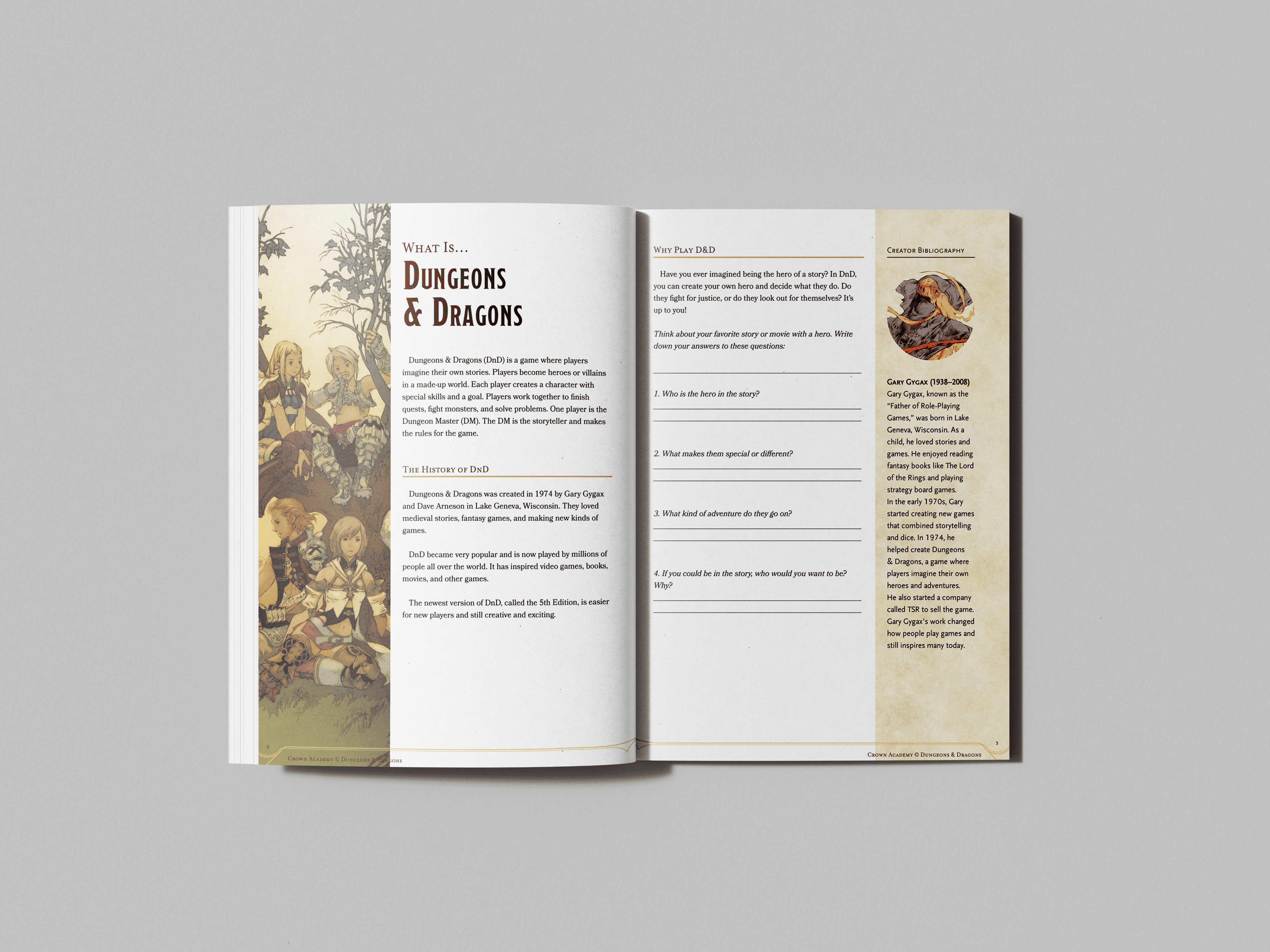
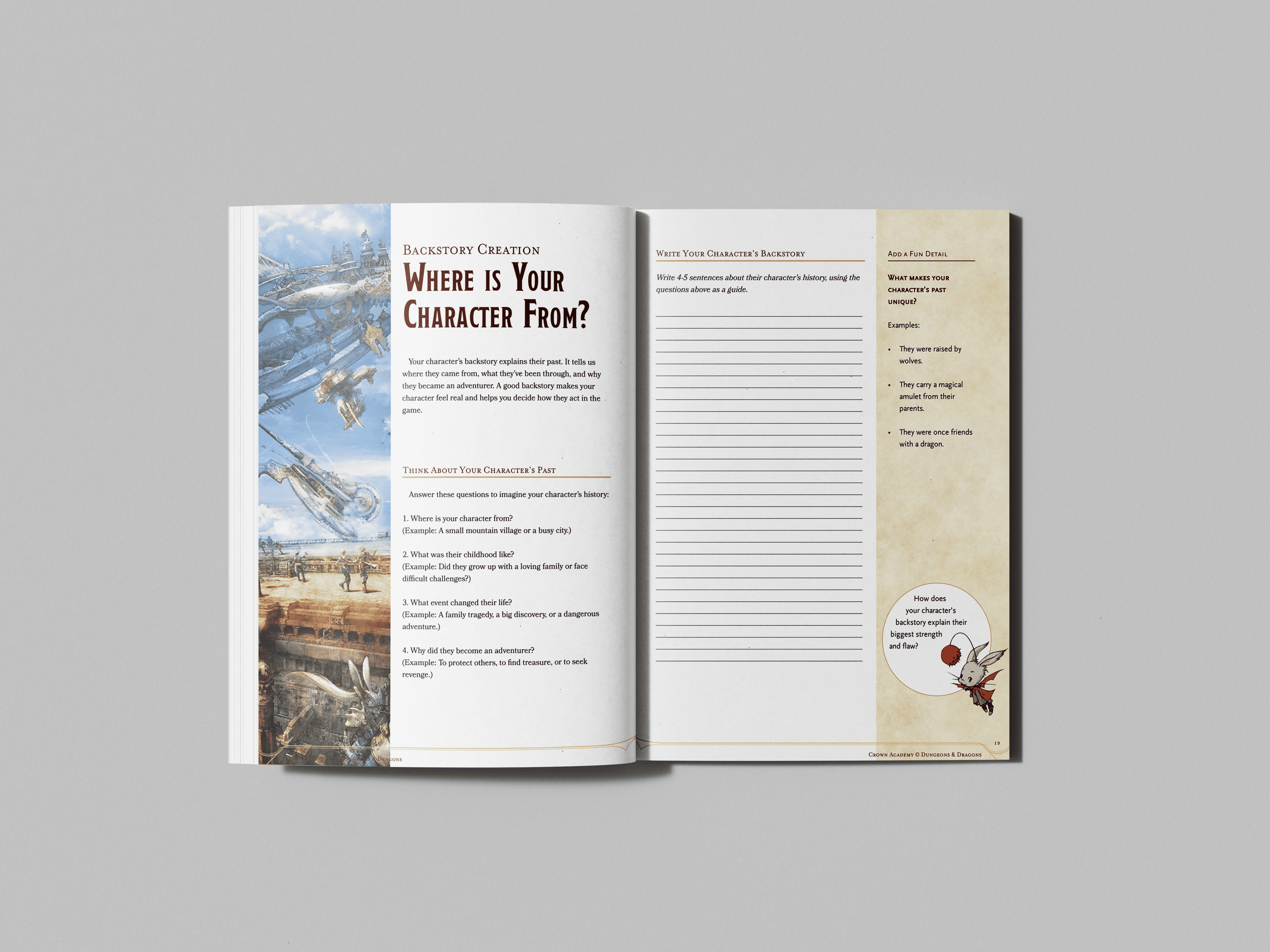
Instructional design and curriculum architecture by Nico Orsini.
Visual design by Zoe Yera of Crow's Call Press.

§ 04

Curriculum Structure

The module is organized into nine thematic units, each building on the narrative and language skills developed in the previous one. Students move from foundational world-building to live collaborative storytelling, culminating in character-level reflection on growth and values.

Unit 01 Introduction
Exploration of tabletop role-playing games and their narrative structures
Connecting student experiences with existing creative outlets
Unit 02 Character Creation
Alignment systems and the exploration of moral and ethical nuance
The role of names and titles in defining character identity
Character classes and subclasses introducing attributes and abilities
Unit 03 Backstories / Lore
Exploring how personal history shapes present and future choices
Narrative terminology and contextual storytelling
Unit 04 World-Building
Environments, creatures, and scenarios within low- and high-fantasy settings
Status effects and their influence on character reactions and decision-making
Unit 05 Literary Elements
Applying literary analysis and semantic awareness within narrative strategy
Unit 06 Encounters
Character archetypes in relation to the Hero's Journey
Structuring narrative challenges, discoveries, and interactions
Unit 07 Questing Materials Pt. 1
Character sheets and associated attributes
Class features and maintaining narrative consistency during play
Unit 08 Questing Materials Pt. 2
Decision points and narrative consequences
Character growth and inventory tracking
Battle logs documenting scene structure and character actions
Unit 09 Debrief
Character reflections on personal growth and thematic values
Fireside journal reflections exploring the internal consequences of story events
§ 05

Learning Outcomes

What students develop
  • Students construct narrative characters with defined motivations and ethical frameworks
  • Learners practice collaborative storytelling and improvisational language through structured play
  • Narrative encounters encourage strategic thinking and applied literacy in context
  • Reflective journaling connects story decisions to personal values and growth