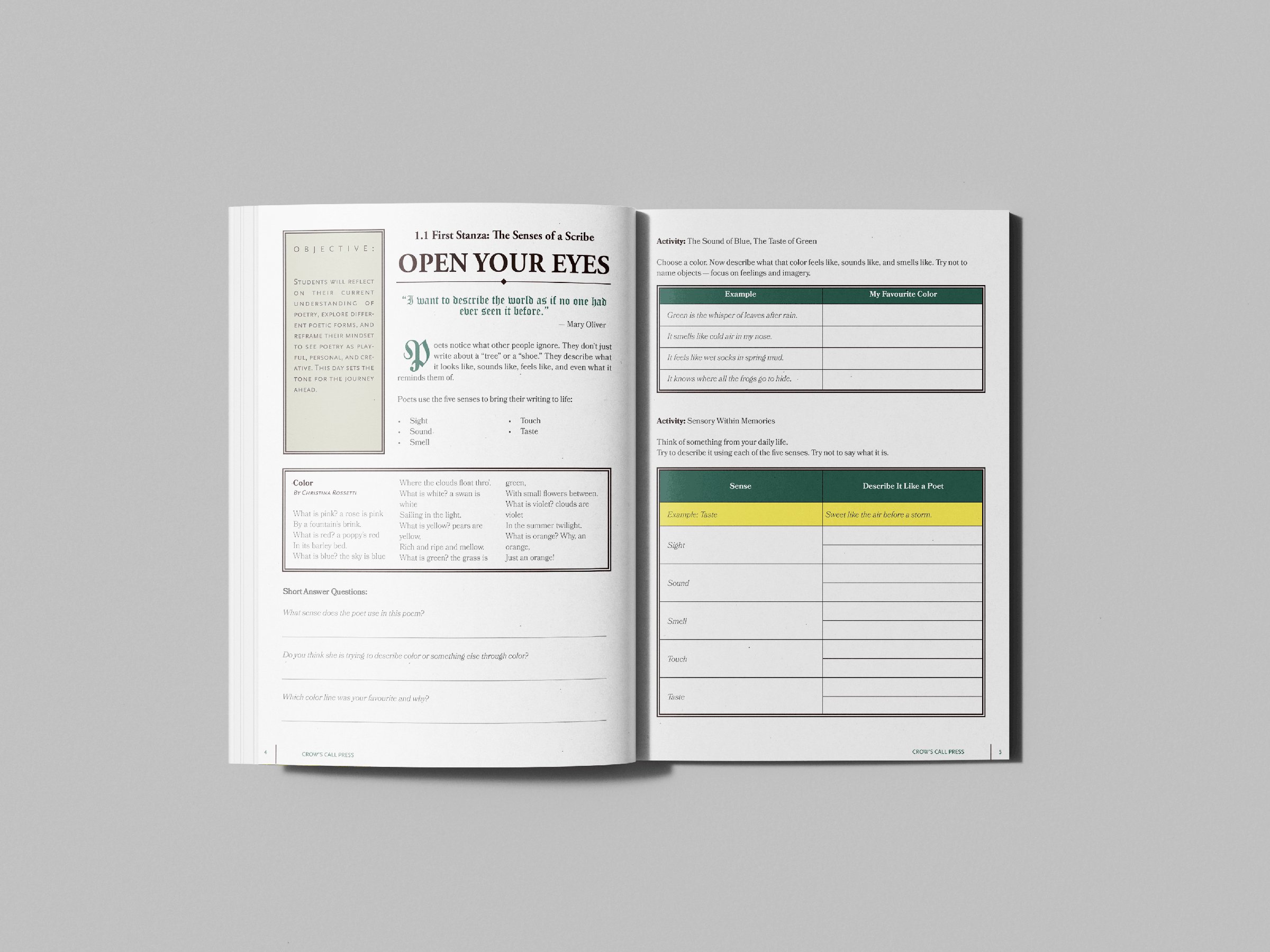
The Making of a Poet is a structured poetry curriculum that guides students through the craft of poetic expression. Using a stanza-based progression, learners move from observation and sensory language to rhythm, sound, and personal voice. Through writing prompts, collaborative reading, and reflective exercises, students build confidence in creative expression while developing deeper literacy and linguistic awareness.
Inspired by the traditions of poetic craft and spoken language, this module introduces students to poetry as both a creative and analytical form of expression. Through structured writing exercises, guided reflection, and collaborative reading, learners explore how language can capture observation, emotion, rhythm, and identity.
The curriculum is organized into progressive stanzas, each representing a stage in the development of poetic voice. Beginning with sensory awareness and observational writing, students learn to recognize how imagery and perception shape meaning. From there, the module moves into the study of cadence and sound, encouraging learners to experiment with rhythm, repetition, and pattern within their writing.
As the course develops, students transition from technical exploration to personal expression, using poetry to articulate memory, perspective, and emotion. The final stages emphasize reflection and authorship, allowing learners to revisit their work, examine the evolution of their voice, and consider how poetry can function as a lasting record of thought and experience.
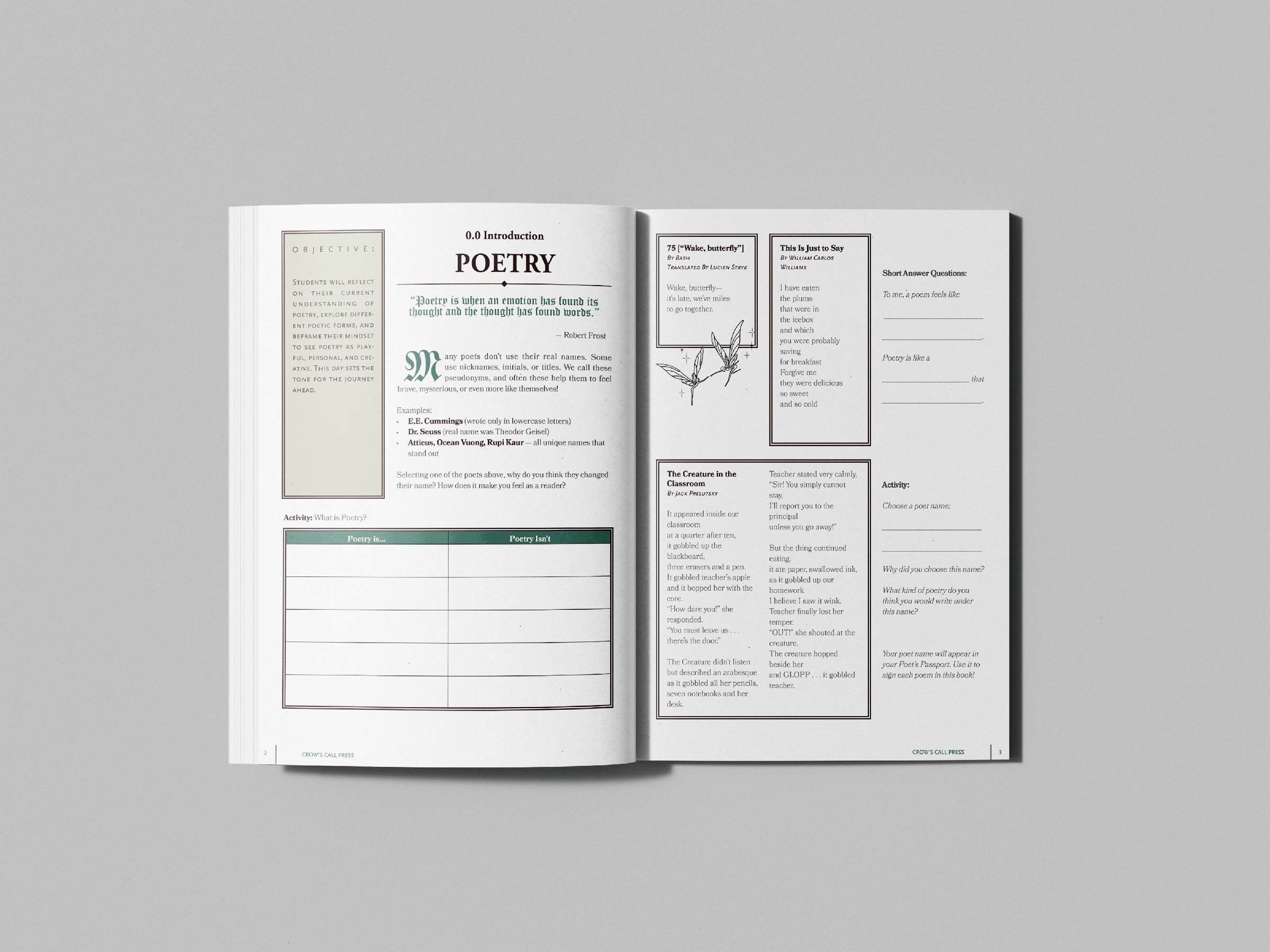
Many language learning environments emphasize grammar accuracy and structured composition, often leaving little space for creative exploration or personal voice. As a result, students may become proficient in technical writing while still struggling to express emotion, perspective, and individuality through language.
For advanced ESL learners in particular, poetry can feel inaccessible or overly abstract when presented primarily through literary analysis rather than creative practice. Students may understand poetic terminology yet lack confidence in experimenting with imagery, rhythm, or metaphor in their own writing.
This project was designed to address that gap by introducing poetry as an experiential process rather than solely a subject of study. Through structured prompts, progressive exercises, and reflective writing, the curriculum encourages students to explore language as a creative medium while gradually building comfort with expressive risk-taking. By shifting the classroom focus from evaluating poetry to actively creating it, the module provides learners with opportunities to experiment with voice, sound, and meaning while strengthening both linguistic confidence and creative literacy.
Instructional design and curriculum architecture by Nico Orsini.
Visual design by Zoe Yera.
The module is organized as five progressive stanzas, each named to reflect a stage in becoming a poet. Students move from initial exploration through sensory awareness, rhythmic craft, personal voice, and reflective closure.
The real activity: take someone else's writing and black out everything except the words that feel alive. What survives becomes yours. Click a word to black it out, click again to bring it back, or press and drag across several to black them out in one pass.
Source text: the opening of “The Yellow Wallpaper” by Charlotte Perkins Gilman, 1892, public domain.
Black out words above — whatever survives becomes your poem.
A line break is a breath. Type a sentence, then click between any two words to insert a break there. Break a slow moment into fragments and it stretches out, holding its breath. Break a quick one the same way and it snaps forward instead. Try both.