N. Orsini • Frameworks
Instructional Document System
Text-Based Analytical Keys
Role
Instructional Designer / Curriculum Author
Format
Book-specific analytical reference documents
Audience
A2-C1 (Junior through Opsis)
Publisher
Crow's Call Press
$ 01

Overview

Role Instructional Designer / Curriculum Author
Format Book-specific analytical reference documents, paired with student workbooks
Audience Multi-level learners across A2-C1 (Junior through Opsis)
Focus Text-grounded literary analysis supporting discussion, interpretive reasoning & response writing

The Crow's Call curriculum operates on a distinction between two levels of instructional document: the methodology, which establishes the transferable analytical architecture used across all levels and texts, and the analytical key, which applies that architecture to a specific literary work. Standard answer keys fail literary instruction in a predictable way: they model one interpretation as the correct interpretation. The Crow's Call keys were designed to resolve this tension: each key provides example responses that demonstrate analytical precision, framing them explicitly as starting points rather than endpoints.

Each key is paired directly with a student workbook for the same text. Where the workbook scaffolds the student's analytical process, the key provides the instructor with text-grounded responses that demonstrate what rigorous analysis looks like, and where the interpretive limits and alternatives lie.
$ 02

Design Approach

Universal / Specific
The system is universal; the analysis is specific. The CROW methodology establishes lesson sequencing, activity design, and phase expectations. The key supplies the text-grounded content that implements it.
Instructional Principles as Precision Tools
Each section opens with a brief Instructional Principle that defines what students must do, what counts as a strong response, and where the conceptual limits lie; calibration instruments, not methodology summaries.
Primary & Alternative Pathways
Archetype classifications, symbolic readings, conflict framings, and thematic statements all include secondary options with brief justifications, reflecting the curriculum's core commitment: interpretation must be defensible, not singular.
Literary Theory Pluralism
Keys support instruction across multiple critical frameworks without privileging any single one. Teachers working with authorial intent and teachers who foreground reader-response both have what they need; neither approach is marked as primary.
Nested Narrative Complexity
Where texts employ complex narrative architectures (embedded retrospectives, unreliable narrators, non-linear chronologies) the keys address this directly, distinguishing frame narrators from embedded first-person accounts.
Scene Anchors over Chapter Tracking
Comprehension questions are organised around major structural movements rather than chapter numbers. Each question references a scene anchor for orientation without tying instruction to rigid pacing requirements.
$ 03

Key Architecture - Seven Sections

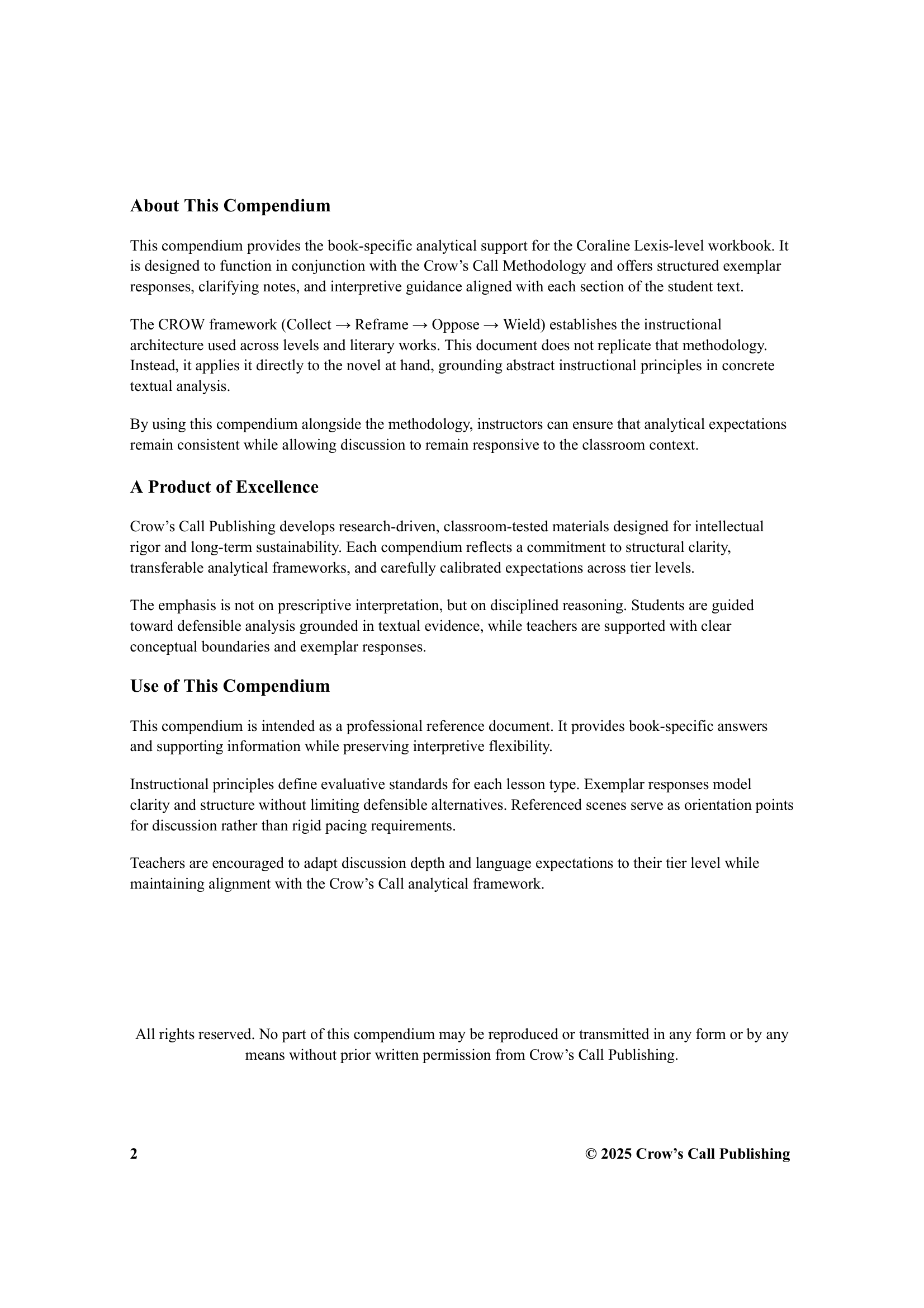
Every analytical key follows a consistent seven-section structure, ensuring that instructors can navigate any key immediately without a learning curve, regardless of which text it covers. The structure maps directly to the CROW methodology phases and the Narrative Analysis System lenses, so students encounter the same analytical architecture across every unit of study.

Section What it covers Distinctive feature
Literary Elements Literary Elements: Setting, plot arc, point of view, tone, foreshadowing Responses model analytical precision over singular interpretation
Archetypes Archetypes: Order / Freedom / Ego / Social framework classifications Includes the True Shadow: the distorted force across the whole narrative, distinct from the antagonist
Character Maps Character Maps: Goal, motivation, values, traits, development arc Character selection menu gives instructors flexibility; flat/round and static/dynamic with textual evidence
Allusions & Symbolism Allusions & Symbolism: External cultural reference (allusion) vs. internal narrative representation (symbolism) Both sections include primary examples with full justification and alternative options
Conflict Analysis Conflict Analysis: Conflict type, competing forces & proposed solutions, outcome Connects conflict patterns to thematic direction; primary and alternative conflicts both provided
Comprehension Questions Comprehension Questions: Three sets aligned to structural arc (beginning, middle, end) Model response and scene anchor per question; promotes holistic reading over recall
Theme Analysis Theme Analysis: Topic vs. theme distinction; defensible thematic statements with evidence Connections to contemporary questions and comparable works; typically three primary themes with full development
$ 04

Sample Key - The Royal Game

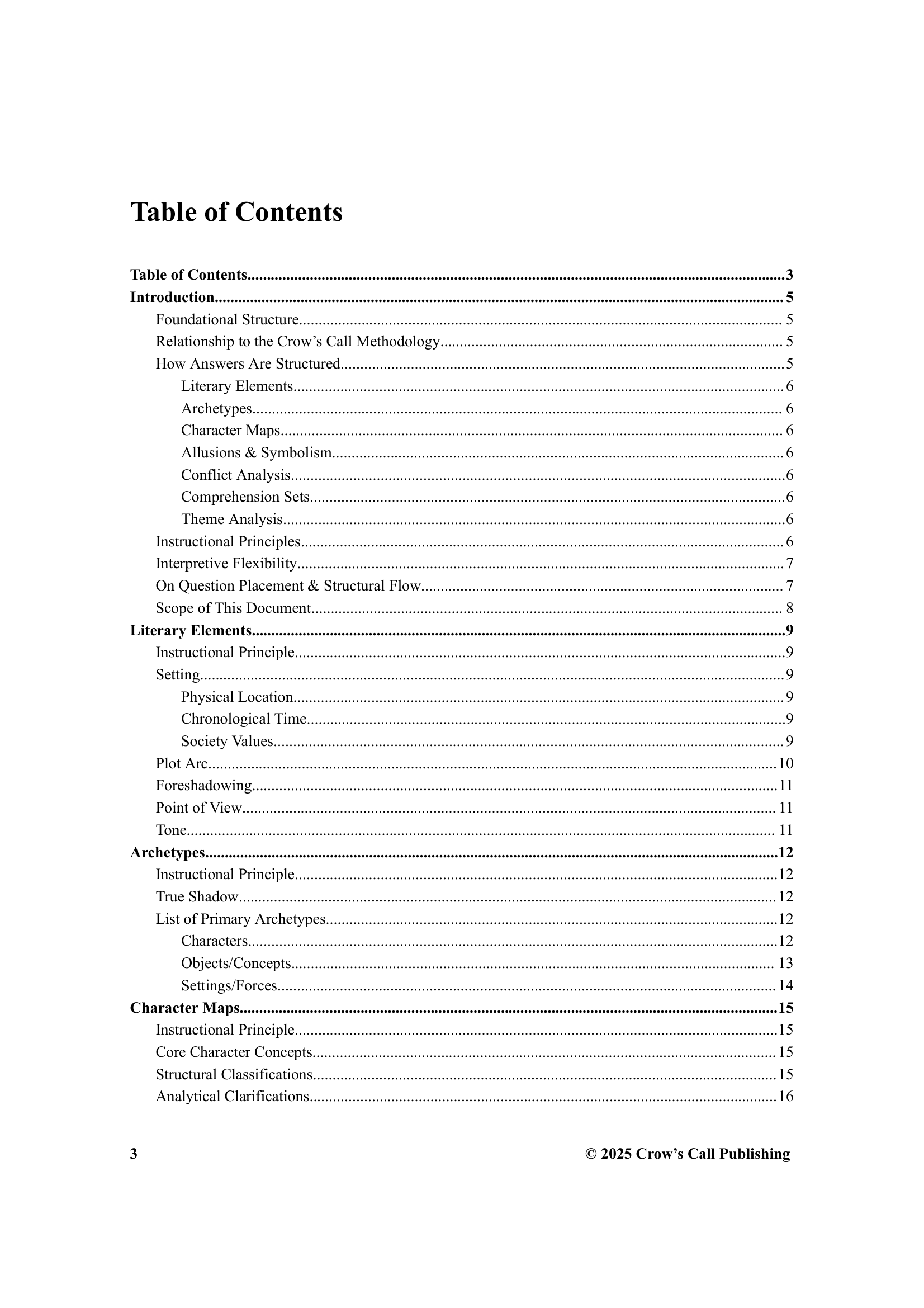
The following pages are drawn from the analytical key developed for Stefan Zweig's The Royal Game (Schachnovelle), used at the Lexis level (B1). The key addresses the novella's nested narrative structure, its engagement with prewar European political history, and its psychological study of obsession and identity fracture under authoritarian confinement.

The Royal Game presents particular instructional challenges that test the key's design principles directly. Its frame narrator, who remains unnamed and observationally neutral, differs substantially from the embedded first-person account of Dr. B., a distinction the key addresses explicitly in its Literary Elements section, providing instructors with language to guide students through the novella's layered perspective architecture without collapsing the two into a single narrative voice.

$ 05

Learning Outcomes