N. Orsini · Frameworks
Analytical Learning Framework

CROW Methodology

Role Instructional Designer / Curriculum Author
Format Cross-curricular analytical framework
Audience A2-C1 (Junior through Opsis)
Focus Structured literary reasoning and developed response writing
§ 01

Overview

The CROW Methodology was developed as the central analytical system governing multiple literature curricula within the Crow's Call instructional model. Rather than treating literary analysis as an isolated skill, the framework organizes interpretation into a repeatable four-phase progression: Collect, Reframe, Oppose, and Wield.

Each phase corresponds to a distinct stage of analytical thinking. Students begin by gathering textual observations, identifying key details in language, character behavior, and narrative structure. From there, they reconsider these observations through interpretive questioning, examining symbolism, motivation, and thematic development.

As students grow more confident in their interpretations, the framework encourages them to challenge their own conclusions through opposing perspectives. This stage introduces intellectual tension and debate, reinforcing the idea that interpretation emerges through critical examination rather than singular answers. The final phase asks students to wield their analysis, synthesizing evidence and interpretation through structured written responses and guided discussion.
The Four Phases
C
Collect

Activate prior knowledge and gather textual observations. Students brainstorm, identify key details, and connect the text to experience, culture, or prior reading.

R
Reframe

Transform raw observations into literary concepts and structured understanding. Students apply vocabulary such as symbolism, POV, tone, and archetype to what they have collected.

O
Oppose

Challenge assumptions through contrast, debate, and critical questioning. Students compare interpretations and evaluate strengths and weaknesses of competing readings.

W
Wield

Apply insights through structured written response and discussion. Students synthesize evidence and interpretation, extending analysis into expressive argument.

§ 02

Instructional Challenge

Many literature classrooms struggle with a common difficulty: students are often asked to produce interpretation before they have developed the skills required to construct it. Learners may summarize plot rather than analyze meaning, rely on teacher explanations rather than independent reasoning, or view literary interpretation as a search for the correct answer. As a result, analytical writing can become formulaic or superficial, particularly for students developing English as a second language.

The CROW methodology was designed to address this challenge by breaking literary reasoning into distinct cognitive stages. By guiding students first through observation, then interpretation, then critical opposition, and finally expression, the framework ensures that analytical thinking develops gradually and intentionally. This structure allows students to build confidence with literary reasoning while strengthening both their linguistic fluency and their ability to articulate complex ideas.

§ 03

Design Approach

Four-Phase Analytical Progression

Each stage of literary reasoning is treated as a distinct cognitive task. Students move from observation through interpretation and critical challenge to expressive synthesis, with each phase building directly on the work of the previous one.

Structured Discussion Techniques

Analytical thinking develops through guided dialogue rather than direct instruction. At each phase, students are prompted to observe, interpret, and justify, which builds both language fluency and critical confidence.

Text-Based Evidence Gathering

The framework is anchored in the text itself. Students are consistently asked to locate and justify their interpretations using specific language, detail, and narrative behavior rather than general impression.

Guided Interpretation of Character and Theme

Students are given defined analytical categories to work within. Rather than approaching a text without orientation, learners examine how characters function, how themes develop, and how narrative structure shapes meaning.

Critical Debate and Opposing Viewpoints

The Oppose phase carries real instructional weight. Students test their interpretations against alternative readings, which sharpens reasoning and prevents analysis from collapsing into personal preference.

Developed Response Writing

Written response serves as the synthesis point for the full analytical cycle. At the Wield phase, students articulate their analysis in structured written form, connecting textual evidence to interpretive argument.

§ 04

Framework in Practice

Framework in Practice
Collect Reframe Oppose Wield
Purpose Activate prior knowledge and personal associations Transform raw associations into literary concepts and structured understanding Challenge assumptions through contrast, debate, and critical questioning Apply insights through writing, speaking, or reflection that connects the text to broader contexts
Student Action Brainstorm, share connections, or respond to opening prompts Apply literary terms (POV, tone, archetypes, symbolism, allusions, theme) to ideas from the Collect phase Compare interpretations, test perspectives, and evaluate strengths and weaknesses Extend analysis into structured written responses or discussion that connects the text to wider contexts
Be Mindful Students may give shallow or unrelated answers. Encourage depth by asking why or how. Students may stop at definitions. Require that terms be applied to examples or comparisons. Students may rely on personal preference. Require reasoning and textual evidence. Students may generalize loosely. Anchor them in the text first, then extend outward.
Activity Frames Brainstorm what students already know about the theme, genre, or big idea. Connect the topic to experience, culture, or prior reading. Classify brainstormed ideas into literary categories. Describe a familiar text using academic vocabulary. Compare two interpretations and reframe them with precision. Debate two opposing readings of a character, theme, or event. Contrast cultural expectations with what appears in the text. Apply a theme, archetype, or symbol to a modern or personal context. Create a new example that demonstrates the literary concept in action.
Unit Learning Progression
Week Core Focus Workbook Pages Writing Tasks Analytical Skills
Week 1 - Foundations Context and orientation Genre Intro, About the Author, Reading Notes, Reflection Essay (from previous unit) Reflection Essay (carry-over) Authorial intention, theorizations, connecting prior cycles
Week 2 - Structure and First Response Comprehension and structure Comprehension 1, Literary Elements, Symbolism and Allusions Developed Response A Distinguishing symbolism (internal) vs. allusions (external); broad application of genre and structure
Week 3 - Characters and Cultural Patterns Character depth and archetypes Comprehension 2, Character Maps, Archetypes, Symbolism and Allusions (extended) Non-applicable Multi-perspective character analysis; archetypes for characters, settings, forces; symbolic and cultural coding
Week 4 - Conflict, Theme and Final Response Synthesis and precision Comprehension 3, Conflict, Theme, Wrap-Up Developed Response B Layered conflicts; themes as universal truths; close analysis of style and structure
Curriculum Levels
Junior
A2

Students develop foundational reading skills while learning to identify textual details and basic narrative elements. CROW phases prioritize Collect and early Reframe.

Lexis
B1

Learners expand their analytical vocabulary and begin interpreting character motivations, thematic ideas, and symbolic meaning. Full CROW cycle with structured debate.

Mythos
B2

Students engage more deeply with narrative structure, archetypes, and thematic interpretation, strengthening their ability to construct analytical arguments under challenge.

Opsis
C1

Independent literary reasoning, critical debate, and sophisticated written responses supported by textual evidence. Students challenge their own interpretations.

§ 05

Framework Documentation

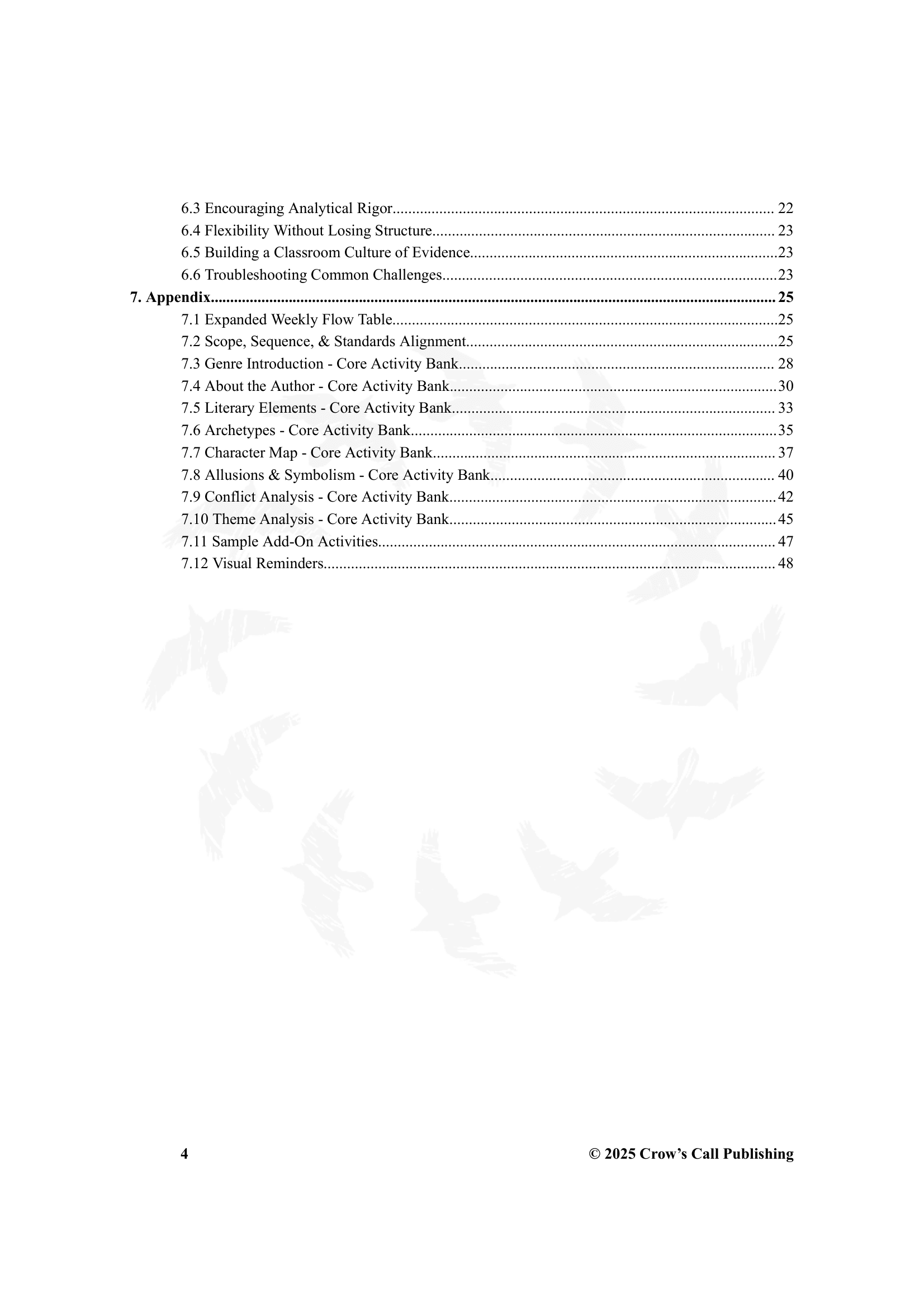
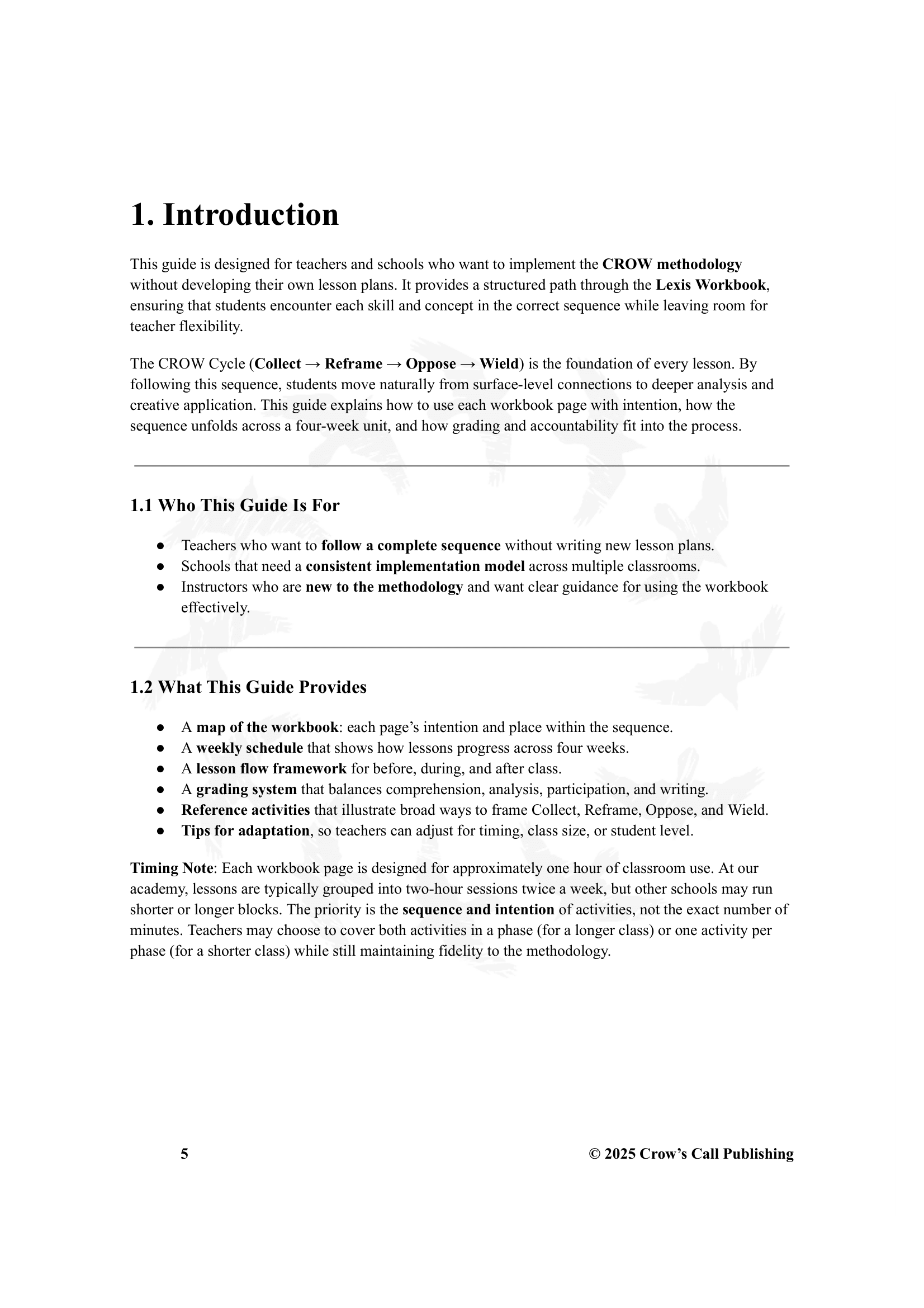
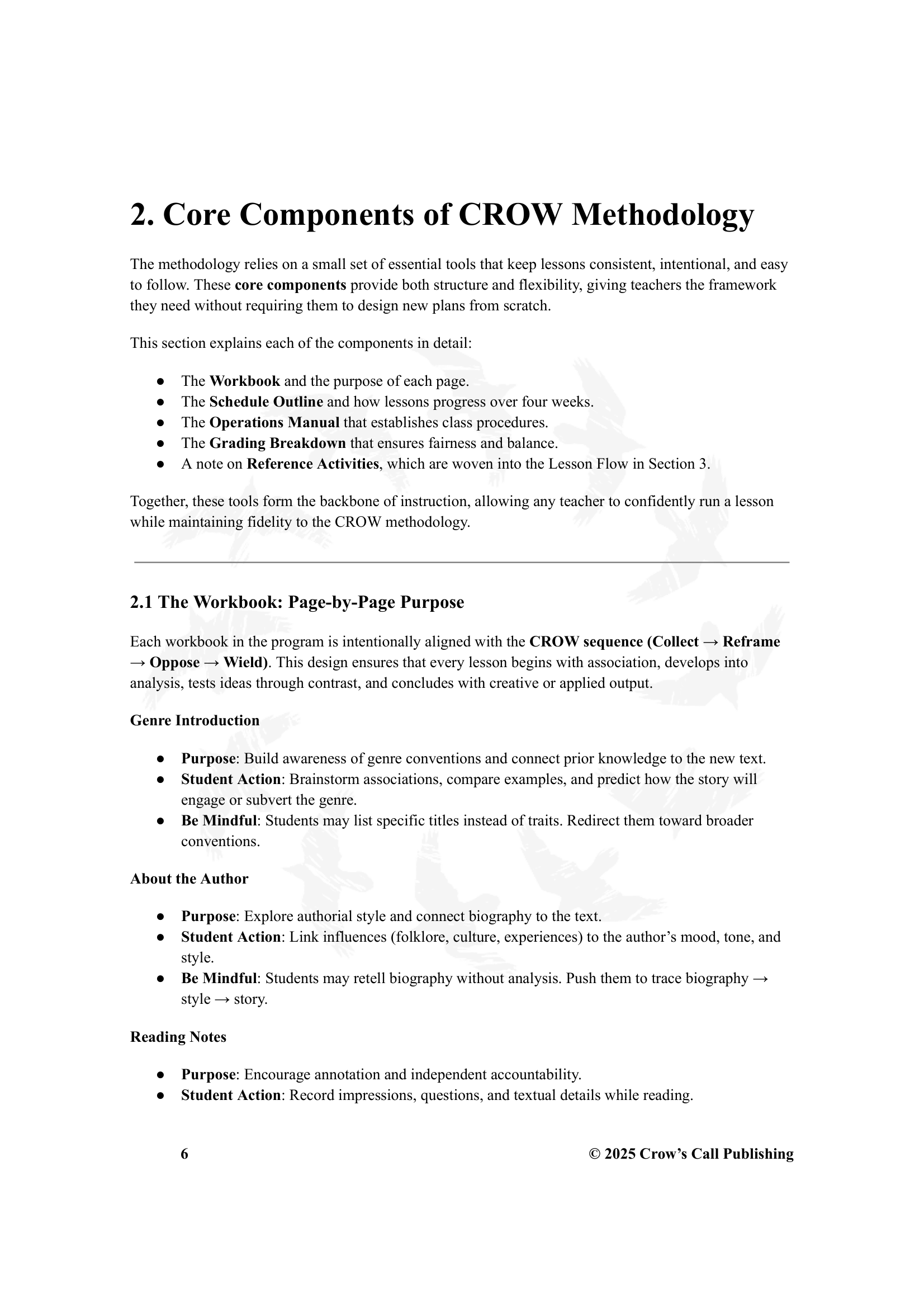
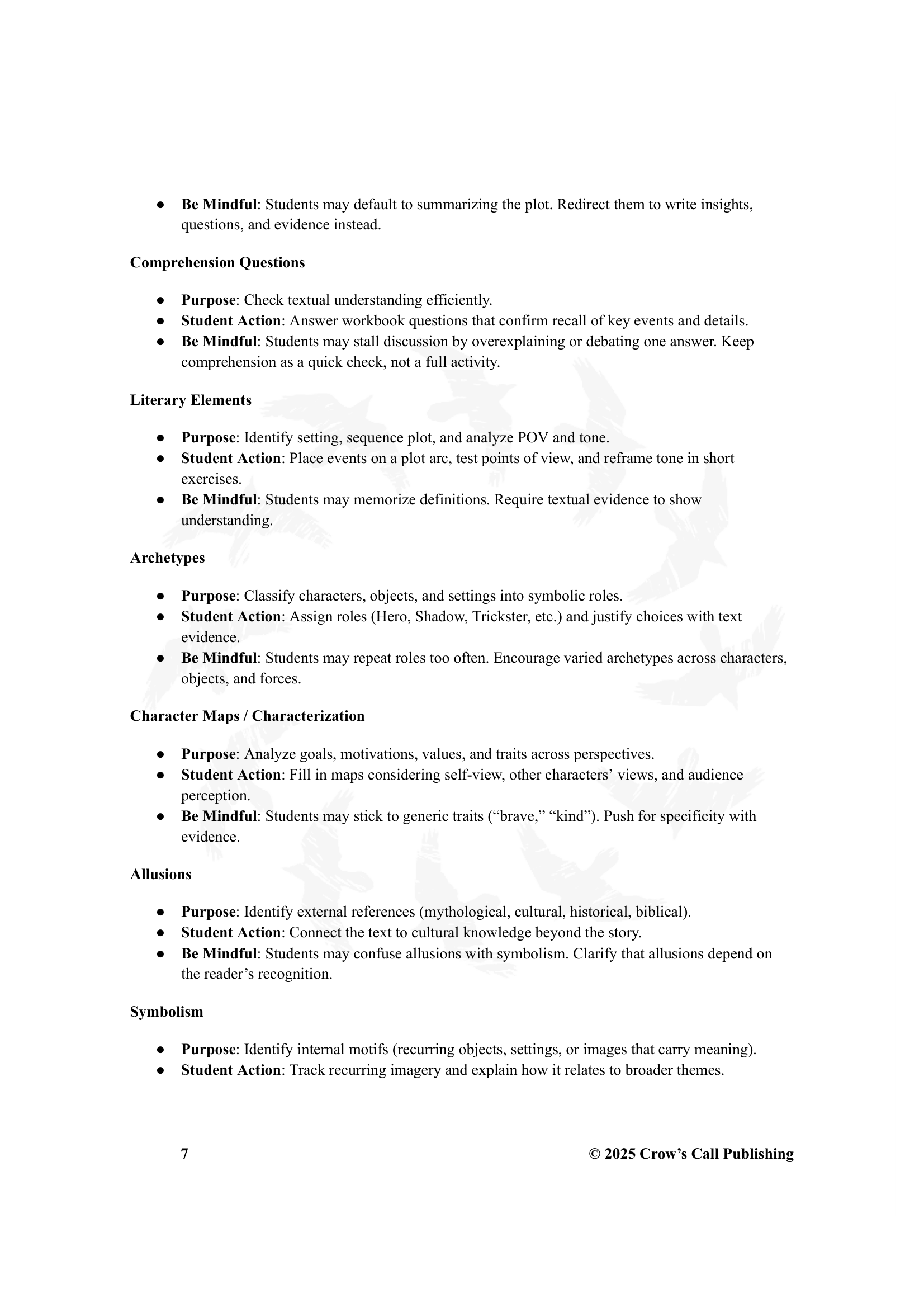
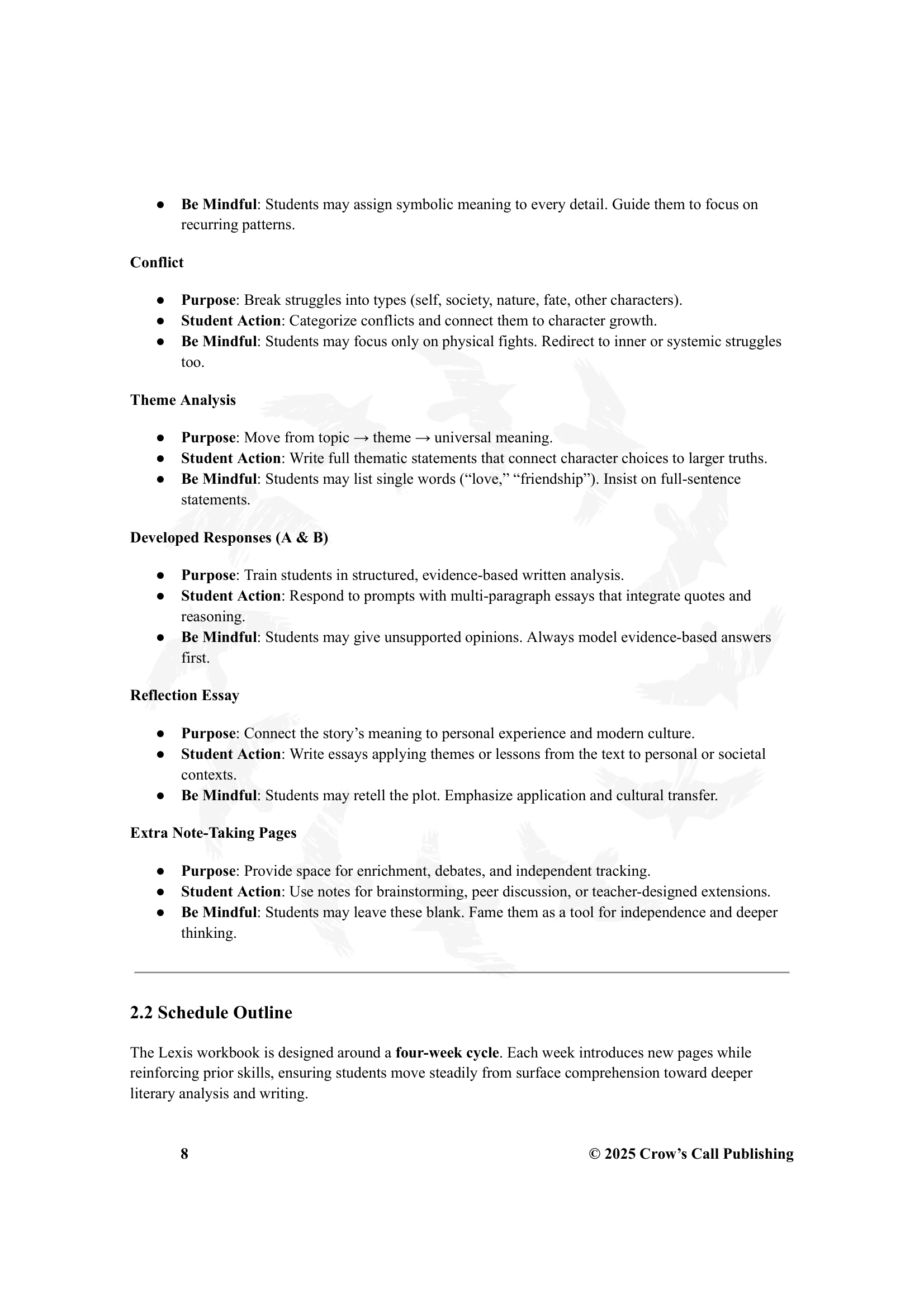
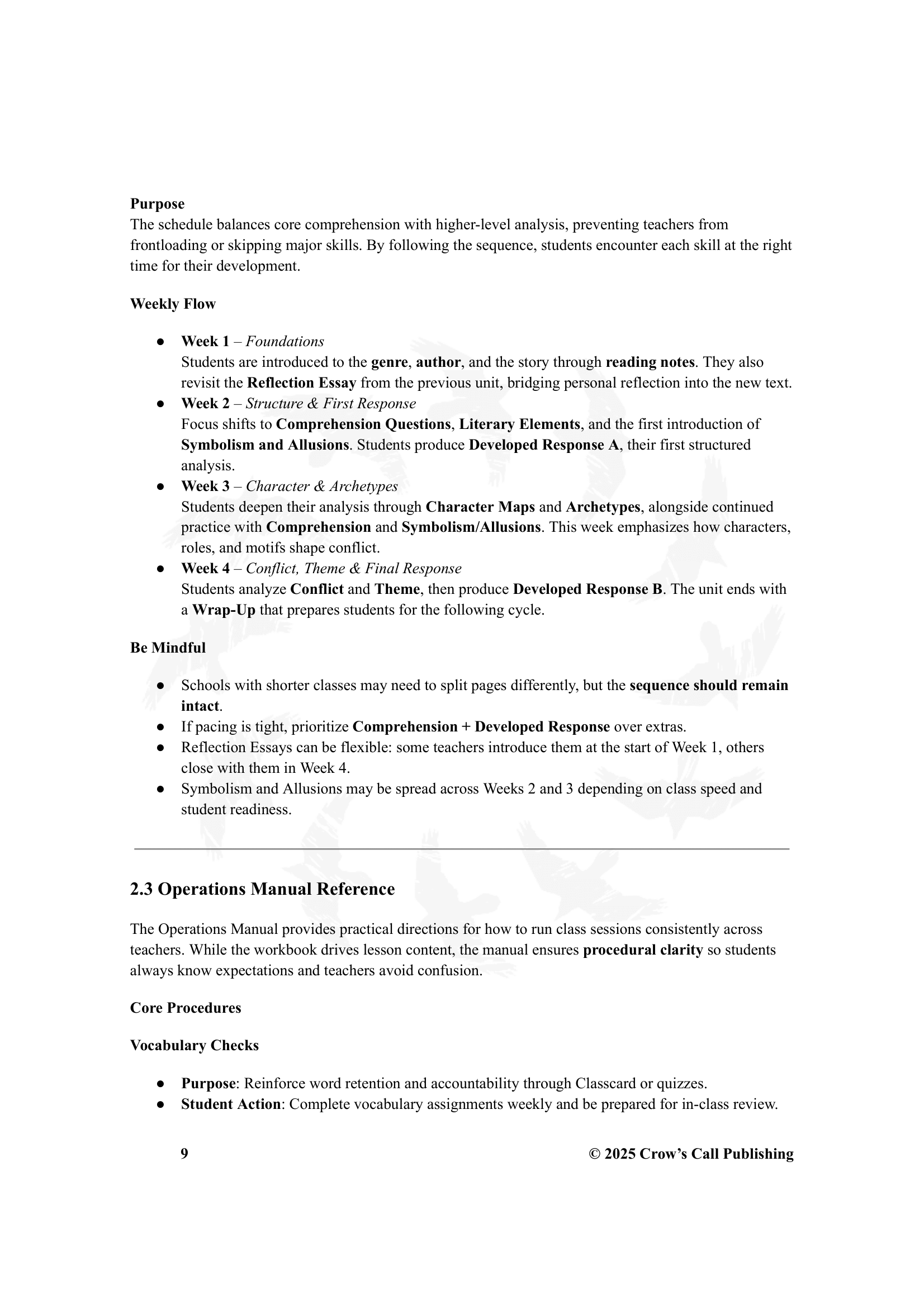
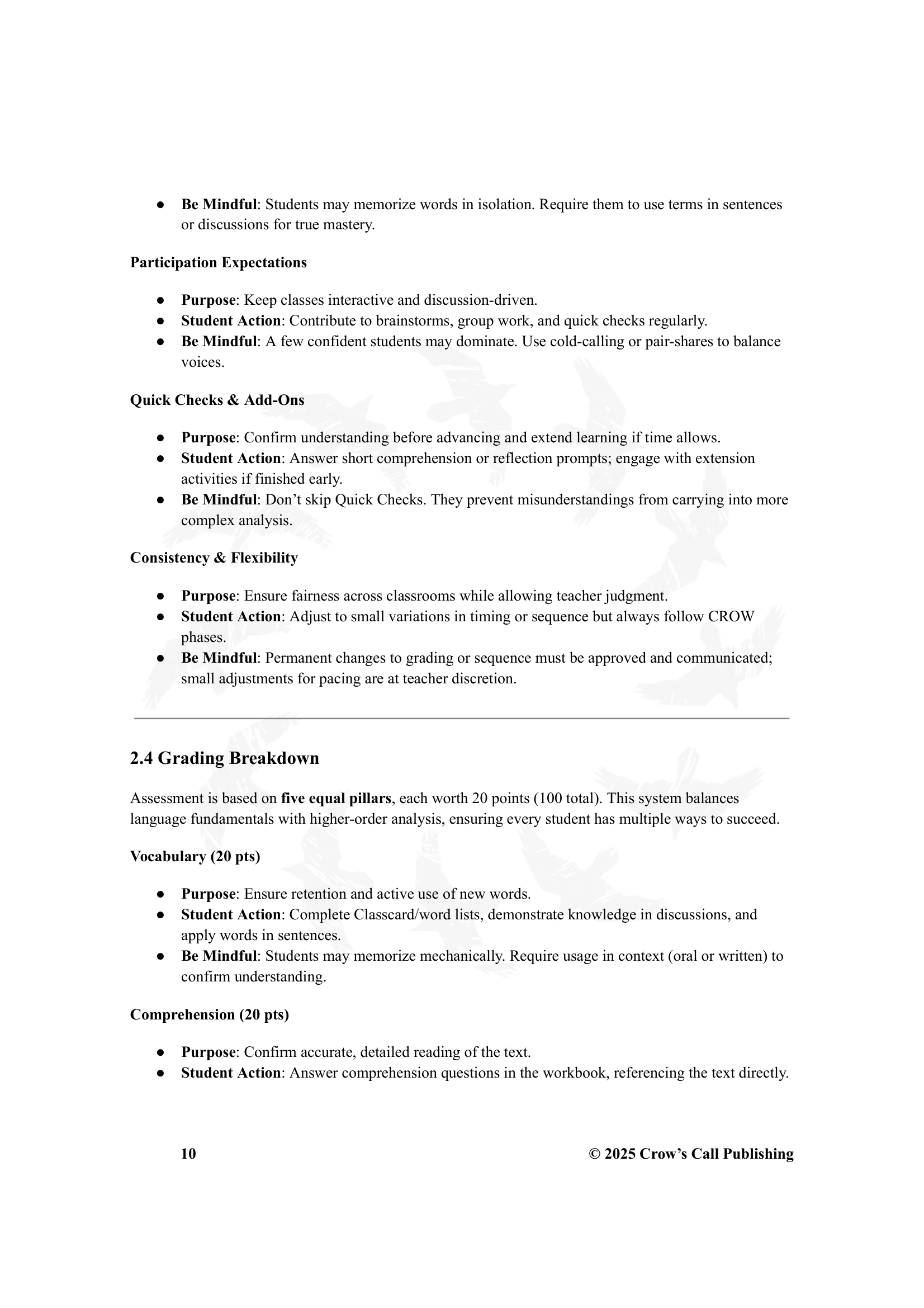
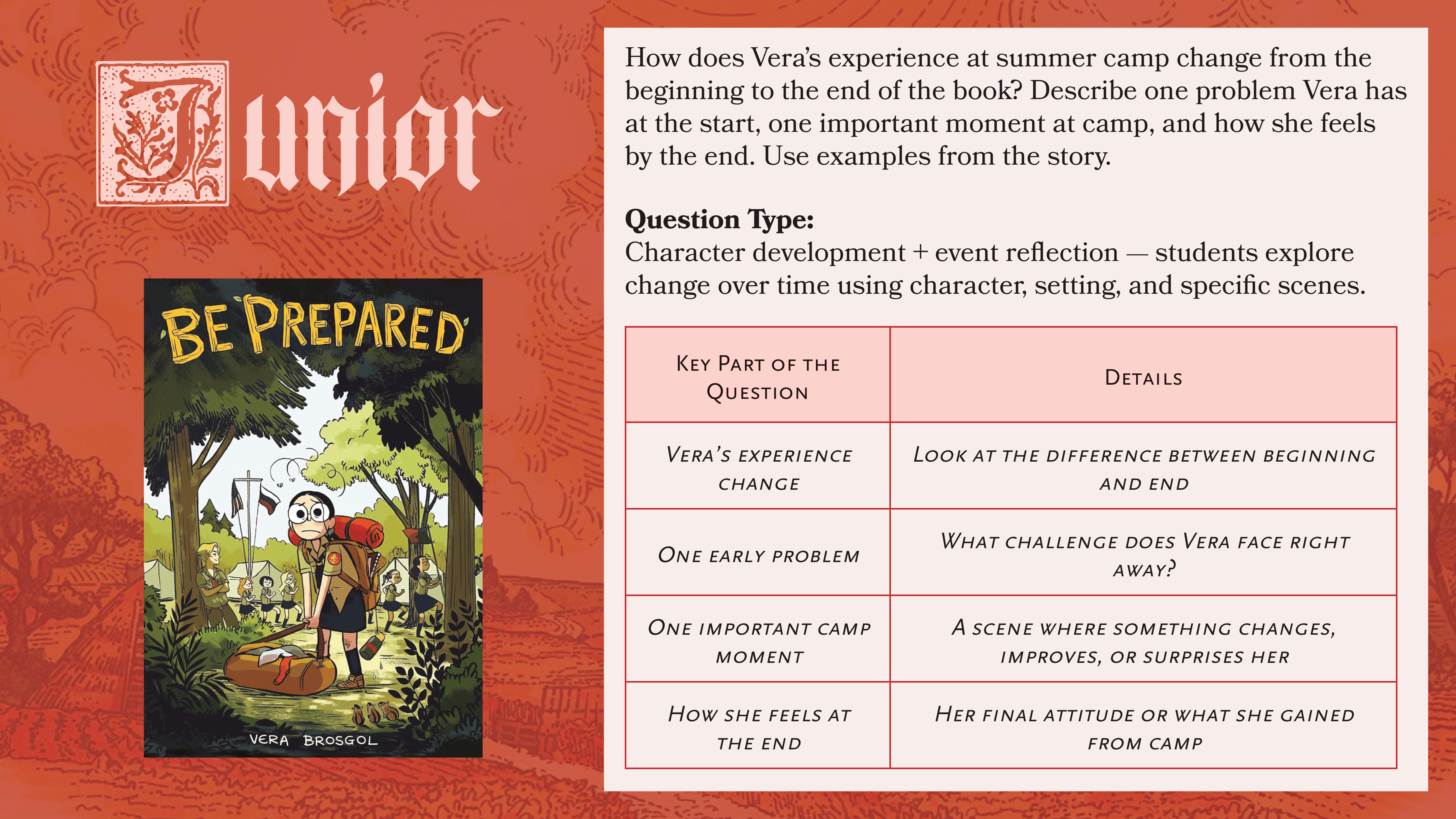
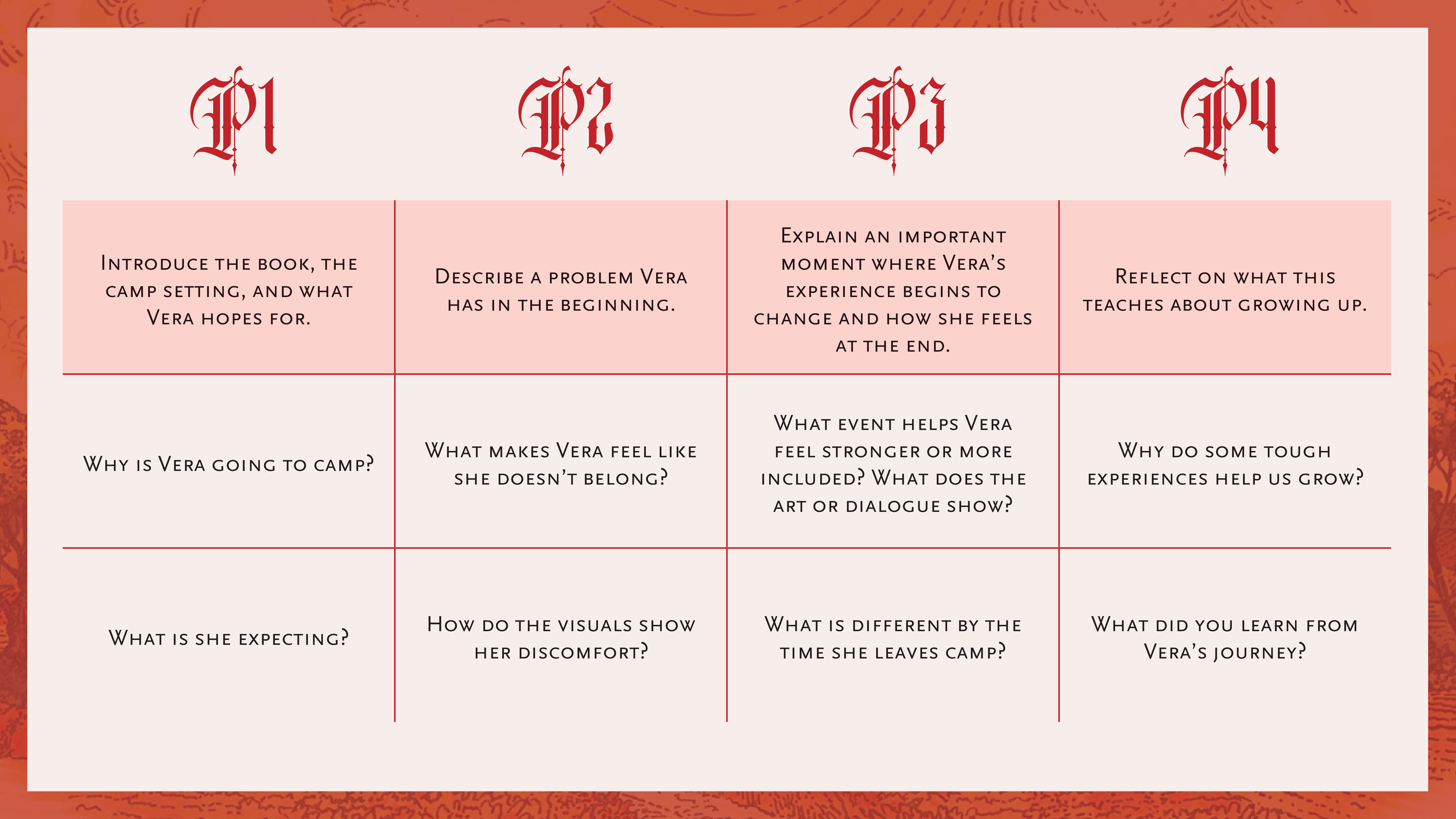
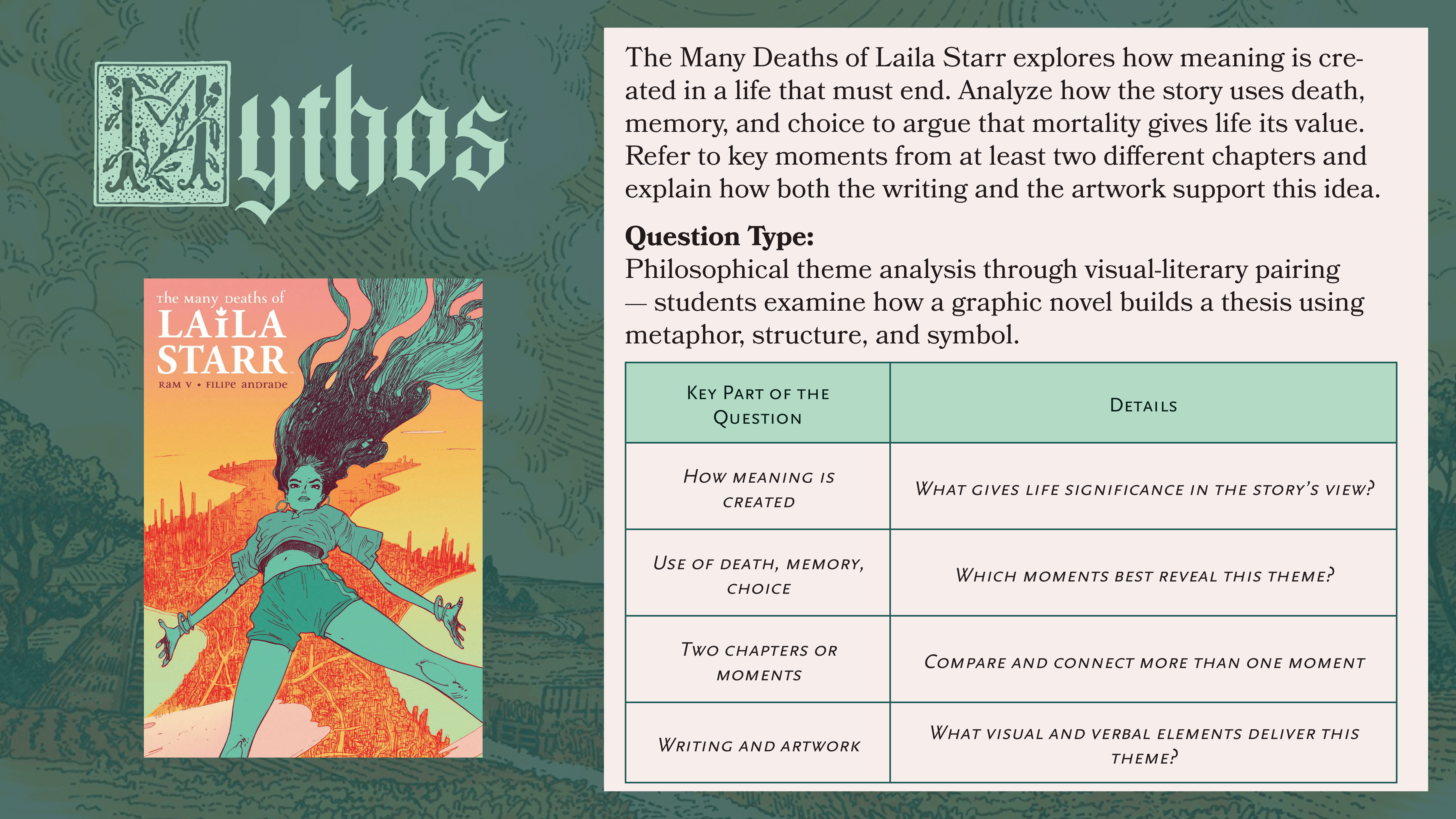
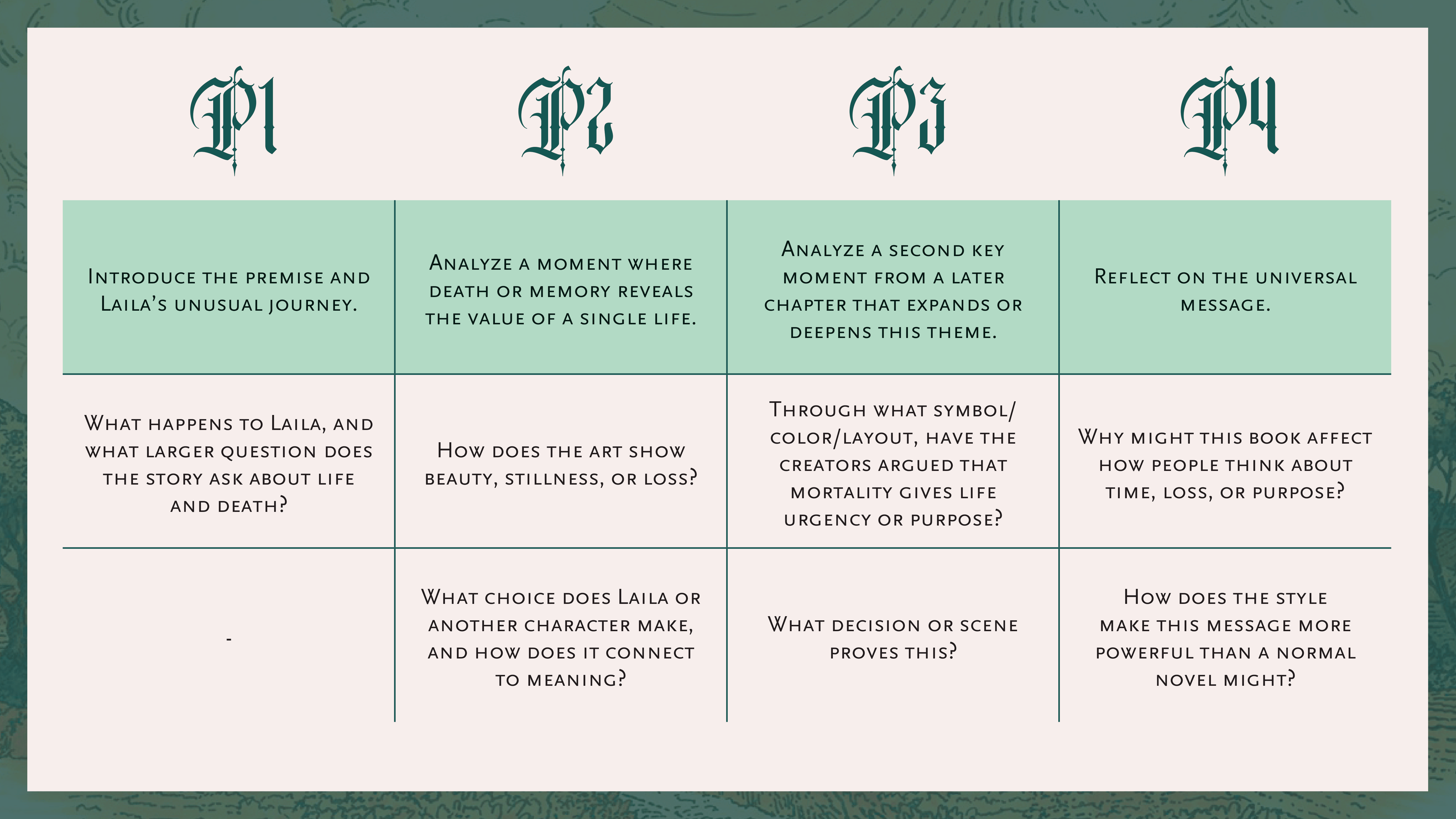
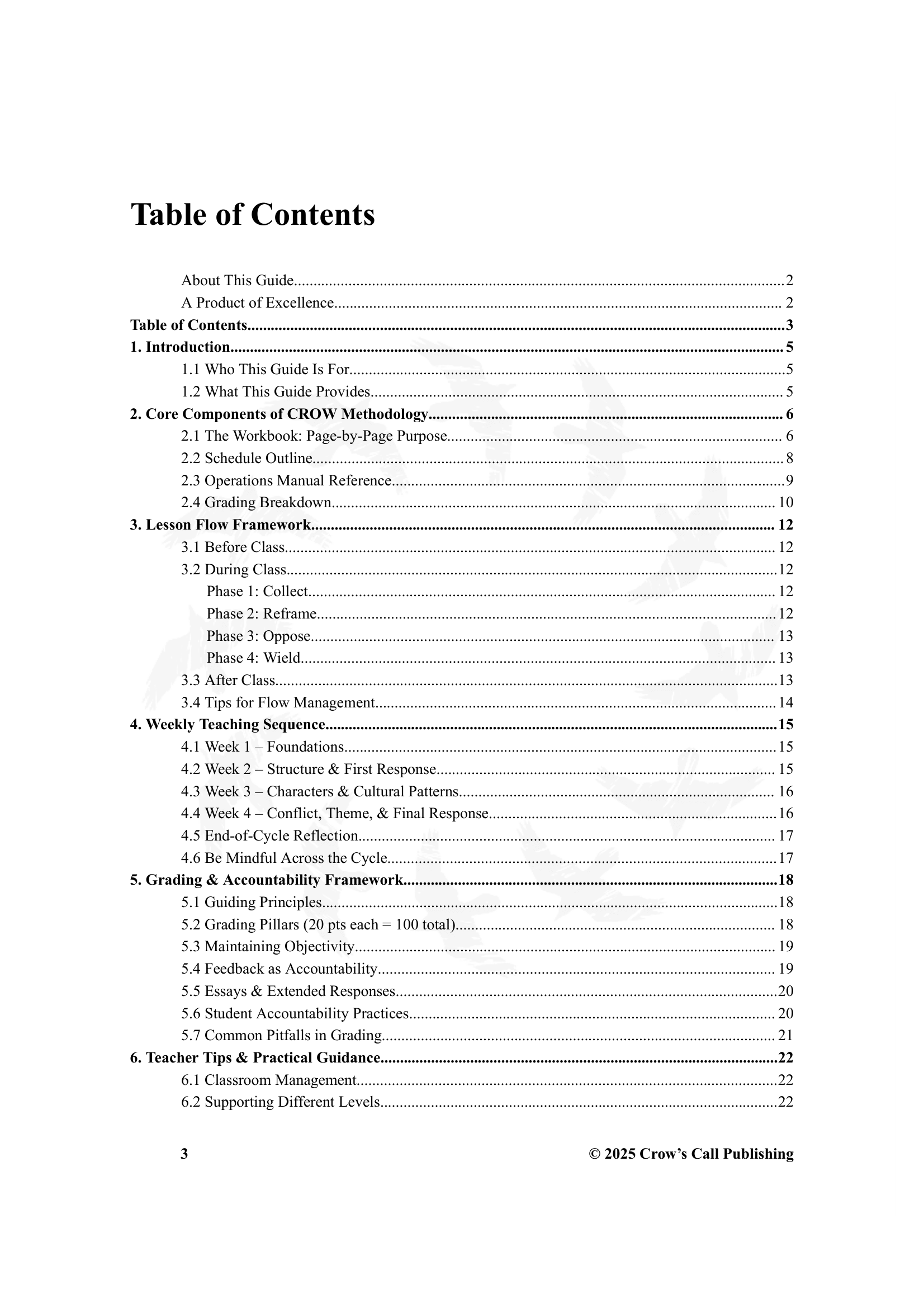
The following pages are drawn from the CROW Framework documentation workbook, which introduces the methodology to instructors and serves as a reference across all curriculum levels.

Methodology Overview
Core Competency Pages
Developed Response Samples

Instructional design and curriculum architecture by Nico Orsini.
Visual design by Zoe Yera of Crow's Call Press.

§ 06

Learning Outcomes

What students develop
  • Students develop structured approaches to literary observation and evidence collection
  • Learners build interpretive reasoning through guided analytical questioning
  • Critical opposition strengthens debate, discussion, and perspective-taking
  • Developed response writing encourages clear analytical expression grounded in textual evidence
  • The framework fosters confidence in independent literary interpretation across all proficiency levels