The System Underneath
CROW is the framework. These are the three things built to run on it.
Four curricula (Junior, Lexis, Mythos, Opsis) share one twelve-month genre sequence, so every level meets the same genre category at the same time, while the complexity of the text, the analytical language, and the depth of debate expected all scale up level by level.
Foundational reading habits. Collect and early Reframe. Structured short responses.
Description moves toward interpretation. Full CROW cycle with structured debate.
Independent, nuanced analysis. Archetypes and theoretical lenses. Oppose gets genuinely contested.
Layered conflict analysis, thematic synthesis, cross-text comparison, real analytical ownership.
Text selection prioritizes literary and structural complexity over length: a short text that sustains genuine interpretive debate beats a longer one that collapses under analysis, and texts are chosen for their capacity to generate conflicting, defensible readings.
| Criterion | Junior (A2) | Lexis (B1) | Mythos (B2) | Opsis (C1) |
|---|---|---|---|---|
| Analytical Yield | Single interpretive layer; clear narrative arc with identifiable theme | Two or more interpretive angles; character motivation and symbolic object | Layered symbolism, archetype, and thematic tension across multiple readings | Sustained interpretive complexity; texts that reward re-reading and resist singular readings |
| Language Level | Controlled A2 vocabulary; short sentences; visual or structural support | B1 accessible prose; some figurative language explained contextually | B2 literary prose; figurative density appropriate for scaffolded analysis | Authentic C1 literary language; idiosyncrasy and stylistic difficulty embraced |
| Conflict Potential | Clear protagonist conflict with room for discussion of choice or consequence | Character vs. environment or internal conflict with competing readings | Unresolved or contested moral terrain; competing value systems | Irresolvable conflicts; texts with no consensus interpretation |
| Representational Range | Culturally accessible; strong visual or narrative clarity | Diversity of authorial voice, setting, and cultural context | Global literary traditions; non-Western narratives and forms | Literary canon alongside contemporary and translated works |
Each unit is delivered through a sequenced student workbook, not a worksheet collection, designed to move learners through the full CROW cycle toward written response.
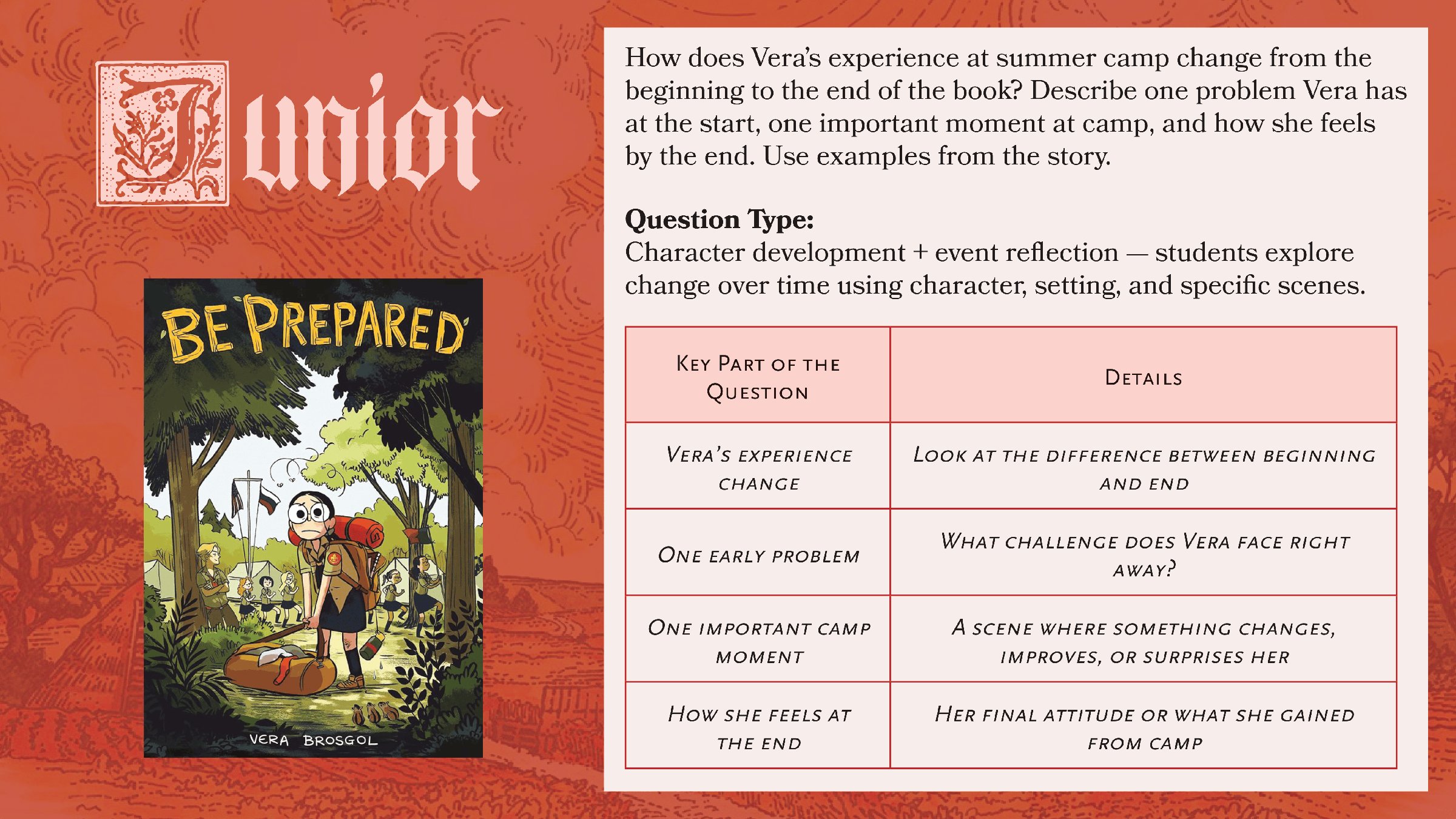
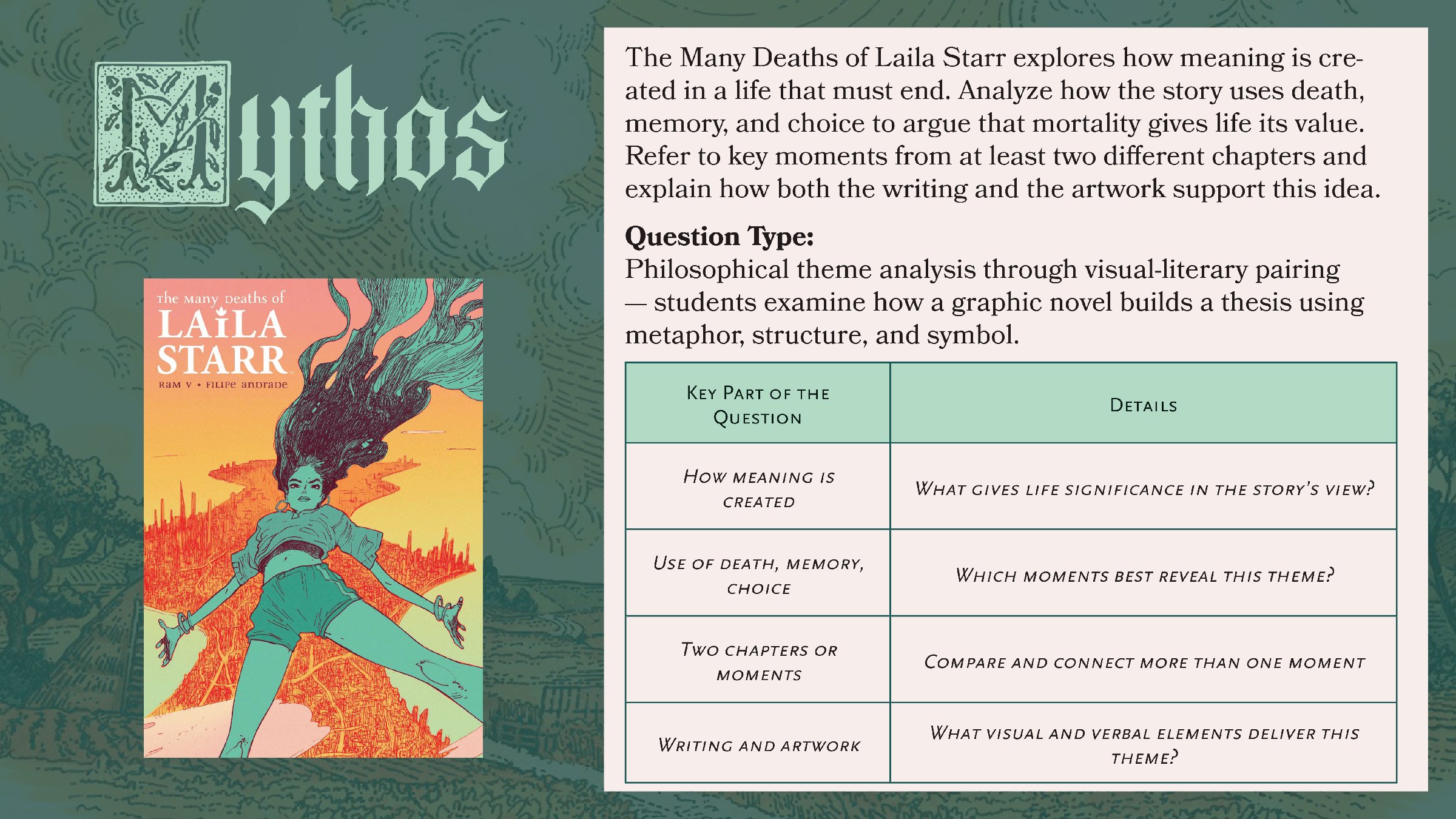
Same question type, two levels apart: the prompt and scaffolding scale with the reader, not just the vocabulary.
Standard answer keys fail literary instruction by modeling one interpretation as the correct one. Every key I write instead follows a consistent seven-section structure, each offering a primary reading plus a defensible alternative, so instructors get precision without being boxed into a single answer.
| Section | What it covers | Distinctive feature |
|---|---|---|
| Literary Elements | Setting, plot arc, point of view, tone, foreshadowing | Responses model analytical precision over singular interpretation |
| Archetypes | Order / Freedom / Ego / Social framework classifications | Includes the True Shadow: the distorted force across the whole narrative, distinct from the antagonist |
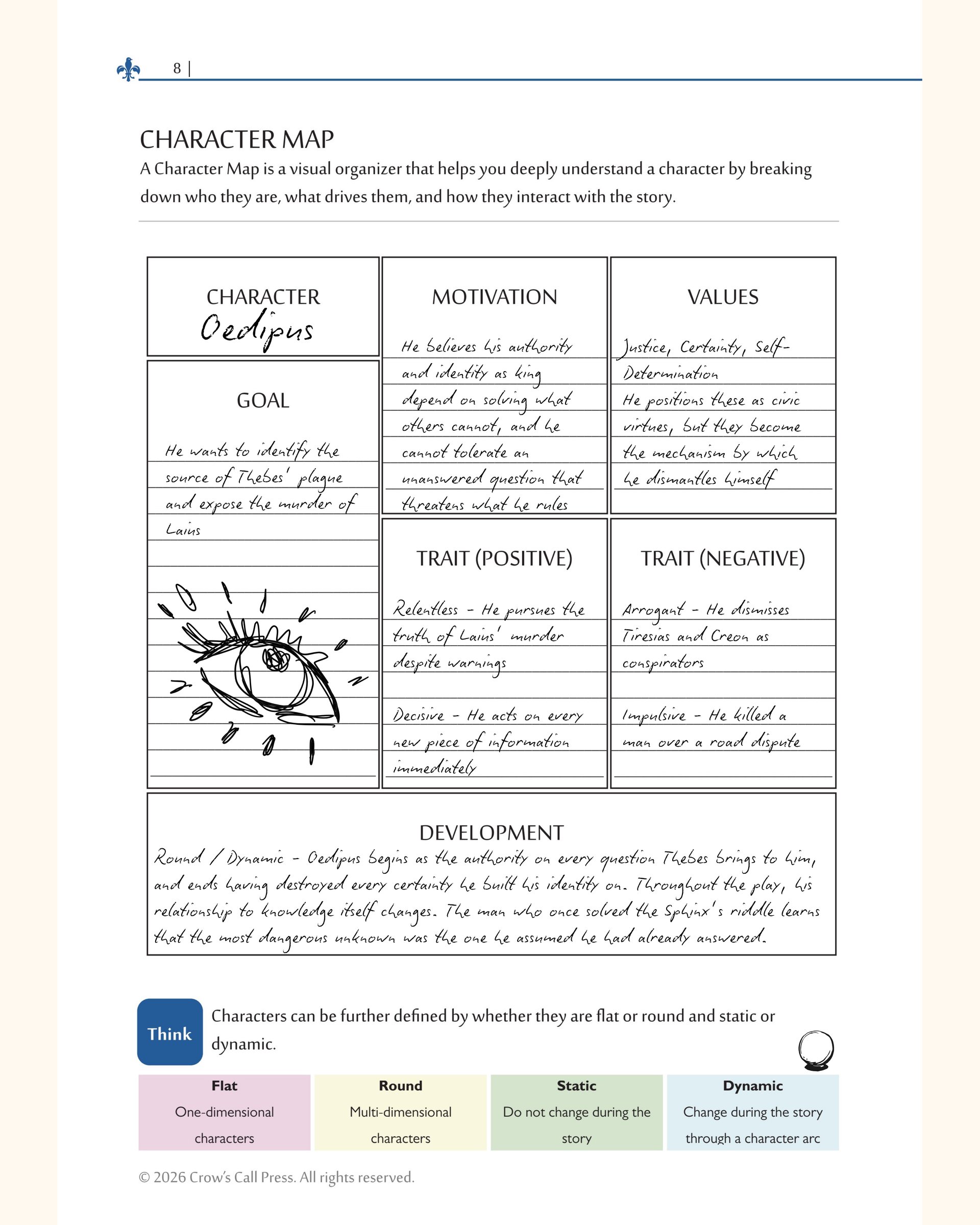
| Character Maps | Goal, motivation, values, traits, development arc | Character selection menu gives instructors flexibility; flat/round and static/dynamic with textual evidence |
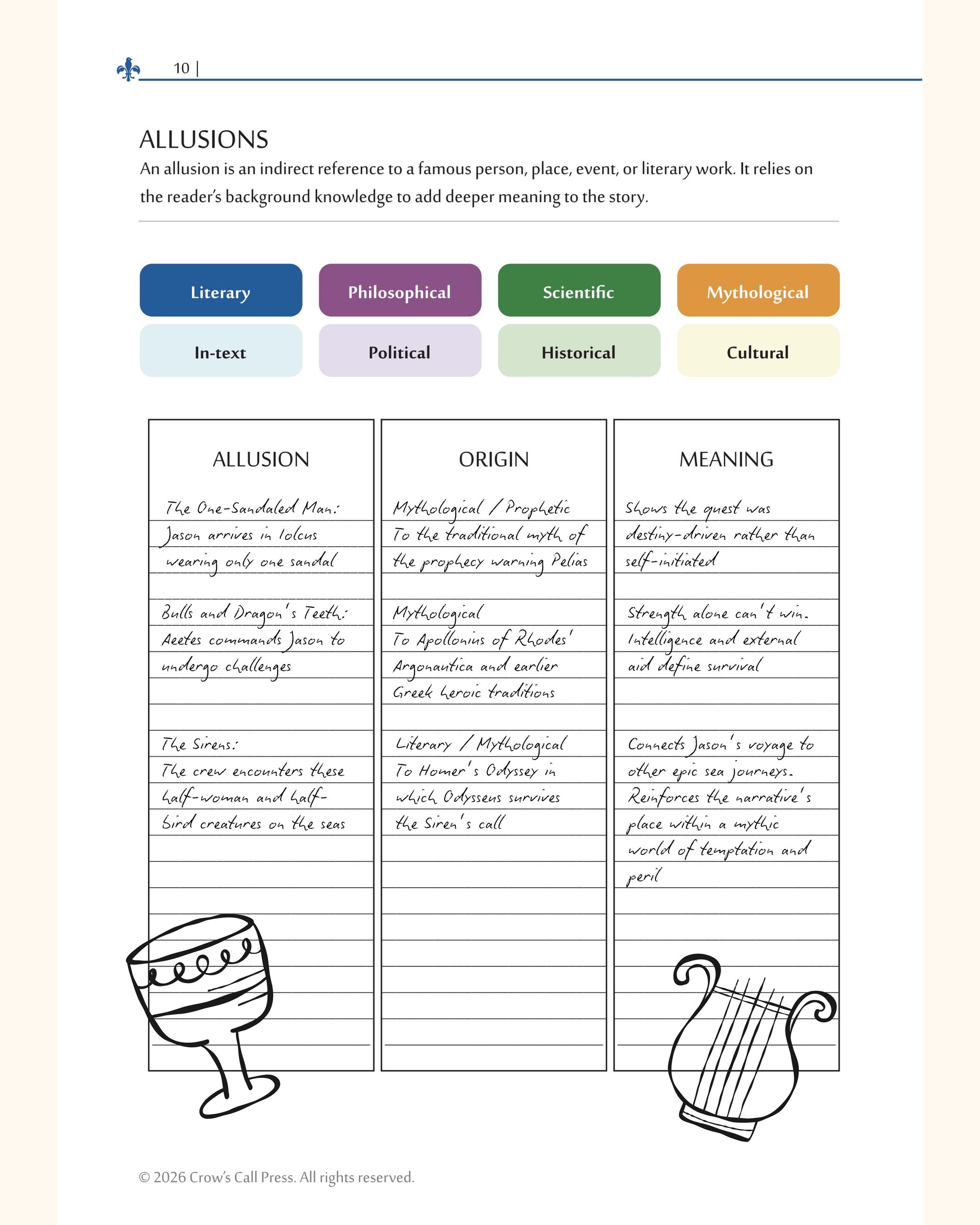
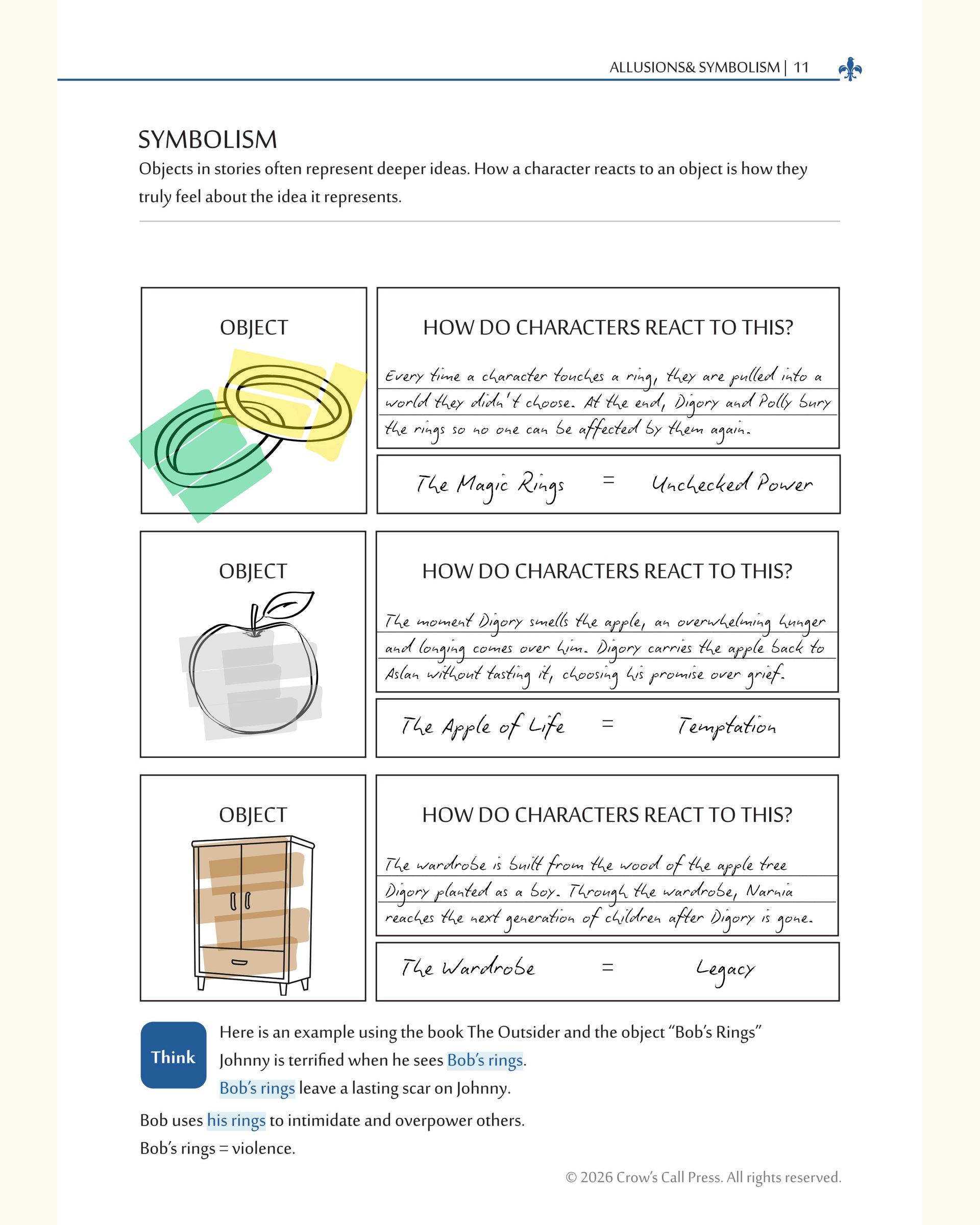
| Allusions & Symbolism | External cultural reference (allusion) vs. internal narrative representation (symbolism) | Both sections include primary examples with full justification and alternative options |
| Conflict Analysis | Conflict type, competing forces & proposed solutions, outcome | Connects conflict patterns to thematic direction; primary and alternative conflicts both provided |
| Comprehension Questions | Three sets aligned to structural arc (beginning, middle, end) | Model response and scene anchor per question; promotes holistic reading over recall |
| Theme Analysis | Topic vs. theme distinction; defensible thematic statements with evidence | Connections to contemporary questions and comparable works; typically three primary themes with full development |
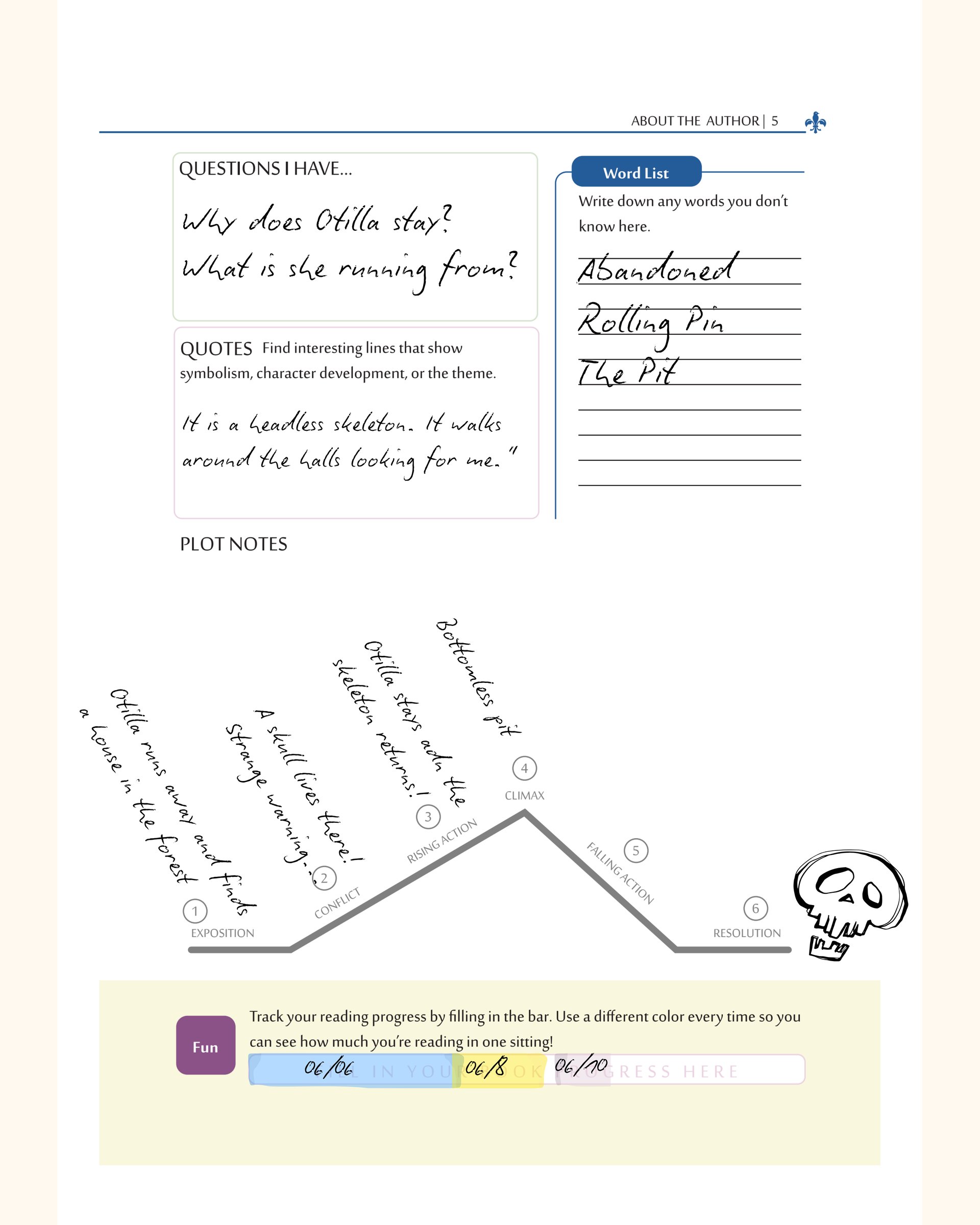
Three lenses give students a repeatable process for reading beneath the surface of a text: Archetypes (universal character patterns across myth and folklore), Allusion & Symbolism (external reference versus internal representation), and Theme Analysis (a defensible claim, not just a topic). Applied here to three different texts, proof the same lenses generalize rather than fitting only one story.
Curriculum architecture, analytical keys, and narrative analysis system all designed by Nico Orsini.